In crowded fashion markets, specialist knowledge can be more powerful than broad assortment.
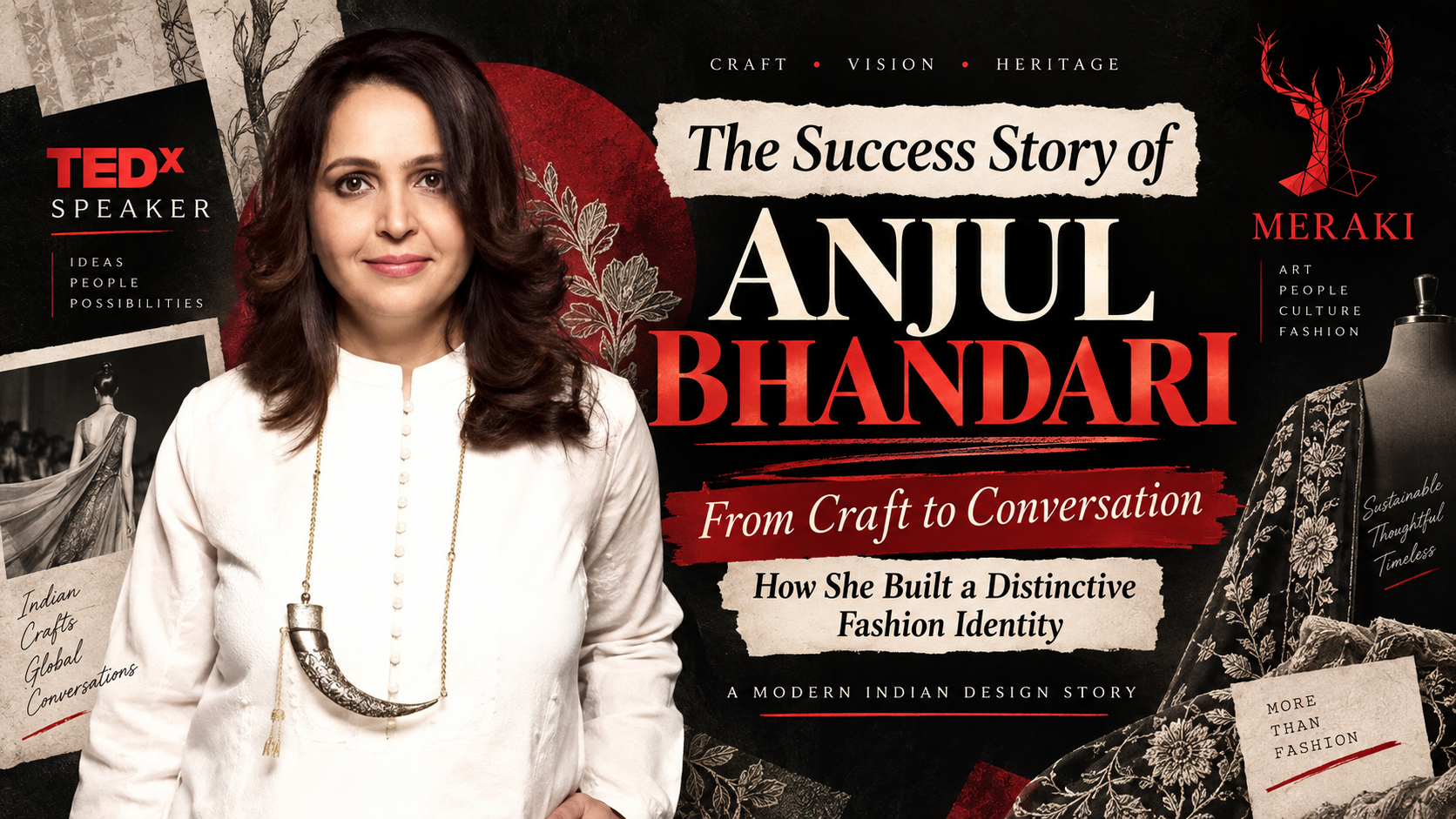
Anjul Bhandari’s work is a useful example of this principle. Her label is closely associated with Chikankari and complementary techniques such as Kaamdani, creating a recognisable design identity around Lucknow-rooted craftsmanship rather than treating embroidery as one seasonal surface treatment among many.
For emerging craft brands, the business lesson is clear: expertise itself can become positioning.
Case study snapshot
| Designer | Anjul Bhandari |
|---|---|
| Label established | 2010, according to public profiles |
| Core craft association | Chikankari and Kaamdani |
| Positioning | Luxury / occasion-led Indian craft |
| Strategic lesson | Deep category expertise can create a stronger luxury identity than broad fashion generalism |
Lesson 1: specialist positioning creates authority
When customers repeatedly encounter a designer in connection with one craft vocabulary, the association becomes a brand asset.
This is especially valuable in Chikankari because the market is fragmented. Customers often struggle to distinguish handwork, stitch types, embellishment techniques and fabric quality. A specialist label can reduce that uncertainty by becoming known for expertise.
Wholesale businesses can use the same logic. A supplier that explains Chikankari stitches, fabric behaviour and quality considerations creates more confidence than one selling only through generic product photographs.
Lesson 2: complementary crafts can expand the product language
One reason Anjul Bhandari’s work is distinctive is the use of complementary techniques rather than Chikankari in isolation.
Kaamdani, mukaish and related metallic embellishment traditions can alter how Chikankari is perceived, particularly in occasion and luxury categories.
The commercial lesson is not to add embellishment indiscriminately. It is to use complementary techniques when they help create a coherent customer proposition.
Lesson 3: luxury comes from coherence
A premium garment is rarely defined by one expensive element.
Luxury perception emerges when:
- fabric quality,
- embroidery,
- colour,
- silhouette,
- finishing,
- styling,
- brand presentation
all support the same value level.
This matters for buyers because adding heavy embroidery to an average garment does not automatically create a premium product.
Lesson 4: educate the customer without turning the product page into a museum label
Craft brands benefit from explaining technique, but the explanation should support the buying decision.
Customers need enough information to understand why the garment is different, not a long history lesson disconnected from fit, fabric and use.
A practical product story might explain:
- what technique is used,
- how it affects texture or appearance,
- what fabric supports it,
- what occasion the product suits.
Lesson 5: premium categories require disciplined quality control
As price rises, tolerance for avoidable defects falls.
Premium craft businesses therefore need stronger control over:
- stains and marks,
- embroidery consistency,
- thread trimming,
- measurements,
- lining,
- finishing,
- packing.
Our 25-point Chikankari quality checklist gives wholesale buyers a practical inspection framework.
Lesson 6: a craft signature can travel across silhouettes
A strong design identity should survive product variation. Kurtas, sarees, lehengas or sets can all feel part of the same house when the craft vocabulary remains consistent.
That creates room to expand average order value without weakening brand recognition.
What emerging Chikankari brands can learn
- Choose a craft territory you can genuinely own.
- Combine techniques only when the result is coherent.
- Make premium value visible in every layer of the product.
- Educate enough to justify value, but keep the customer journey commercial.
- Use one recognisable craft signature across multiple silhouettes.
What wholesalers and retailers should take from this case
Retailers do not need to copy couture to learn from specialist designers. The transferable idea is segmentation.
A boutique can create a premium Chikankari tier by choosing better fabrics, denser or more distinctive work, cleaner finishing and stronger visual presentation rather than simply increasing price.
Use our price-ladder planning guide to define those tiers before selecting stock.
Sources and methodology
This article draws on public fashion coverage of Anjul Bhandari’s work, including Vogue India’s feature on Kaamdani and related embroidery traditions, alongside the label’s public brand information. Interpretive commercial lessons are our analysis.