Authentic Lucknow Chikankari | Wholesale | Manufacturing | Private Label SHOP NOW

Authentic Lucknow Chikankari | Wholesale | Manufacturing | Private Label SHOP NOW
IN-HOUSE QUALITY CONTROL FOR B2B CHIKANKARI ORDERS
Chikankari Quality Control for Wholesale, Custom & Private-Label Orders
Quality control is handled by an in-house QC team so wholesale, custom and private-label orders can be checked without depending on an external inspection step.
Our QC system is built around the product details that matter most to B2B buyers: sizing, finishing, embroidery quality, zero-defect inspection parameters and extra loose-thread cutting. Orders go through 3 QC checkpoints before final dispatch.
Because the QC team works in-house alongside production, finishing and packing, issues can be identified and corrected faster—supporting quicker dispatch and better order consistency.
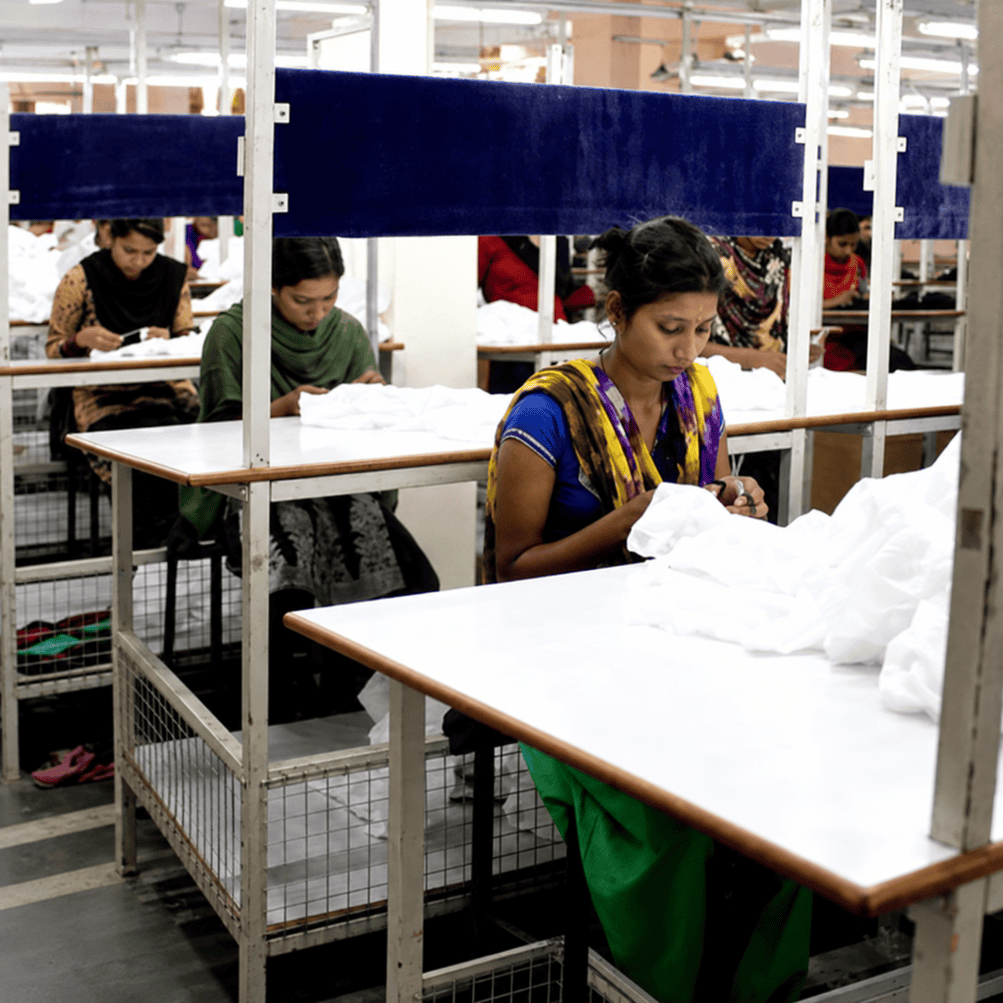
Our 5 Core QC Parameters
Each QC checkpoint works against practical product parameters rather than a generic visual check.
Sizing
Measurements are checked against the applicable size specification so the packed product matches the approved size requirement.
Finishing
Overall garment finishing is reviewed before dispatch, including presentation, construction finish and visible product issues.
Embroidery Quality
Chikankari work is inspected for the approved embroidery appearance, workmanship and obvious execution issues.
Zero-Defect Parameter
QC follows a zero-defect inspection target: visible defects or specification issues identified during checking are flagged for correction before dispatch.
Loose Thread Cutting
Extra loose threads are identified and cut during finishing/QC so the garment is cleaner and better prepared for packing.
3 QC Checkpoints Before Dispatch
We carry out QC three times before the order is dispatched. Across these checkpoints, the team repeatedly verifies the product against the required sizing, finishing, embroidery, defect and loose-thread parameters.
Repeating QC instead of relying on one final inspection reduces the chance that an issue travels unnoticed into the packed order. The exact production stage at which a particular check is repeated can depend on the order type and workflow.
QC CHECKPOINT 1
Product is checked against the applicable quality and specification parameters.
QC CHECKPOINT 2
Checks are repeated after further finishing or order preparation to catch issues before final packing.
QC CHECKPOINT 3
Final pre-dispatch QC confirms the order is ready to move into packing and shipment handover.
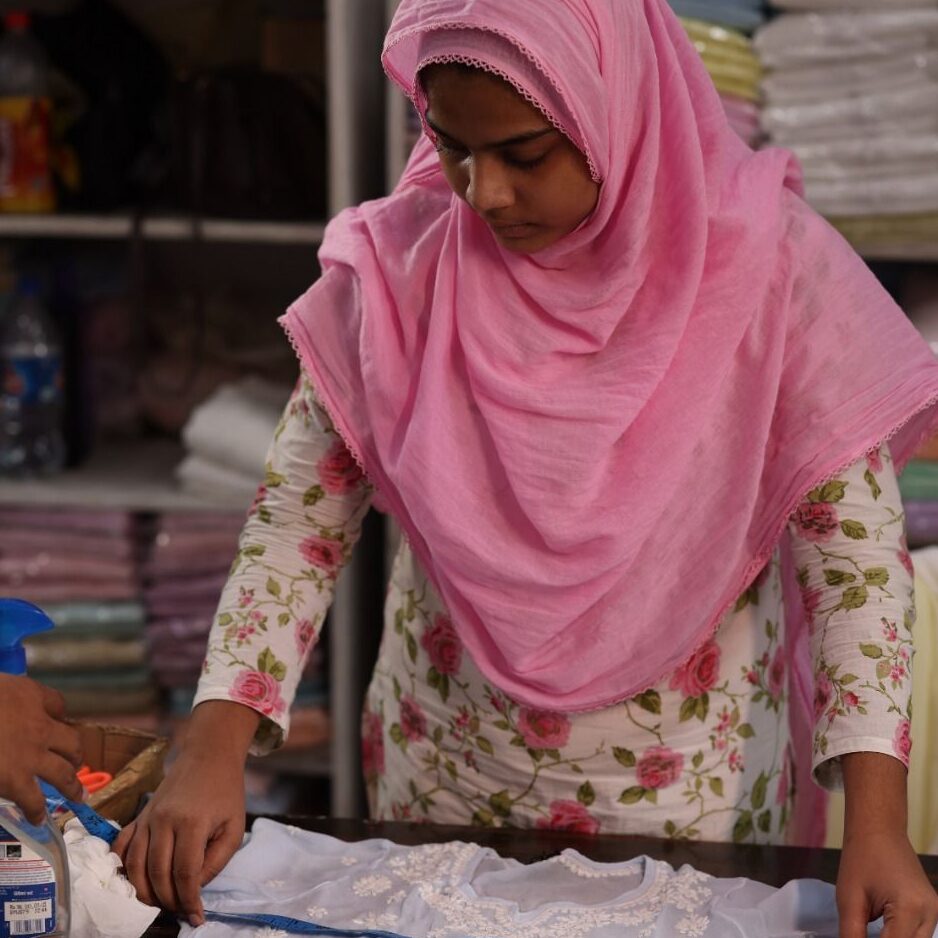
Sizing QC: Measurements Before the Product Reaches the Buyer
Sizing is one of the most important B2B QC parameters because a product can look correct but still create returns, exchanges or retail problems if its measurements do not match the approved size.
For applicable products, QC works against the required measurement specification and size label. In private-label work, the buyer’s approved size chart can become the relevant reference.
For online sellers, retailers and international buyers, measurement consistency also improves product-page accuracy and helps the buyer communicate fit more clearly to customers.
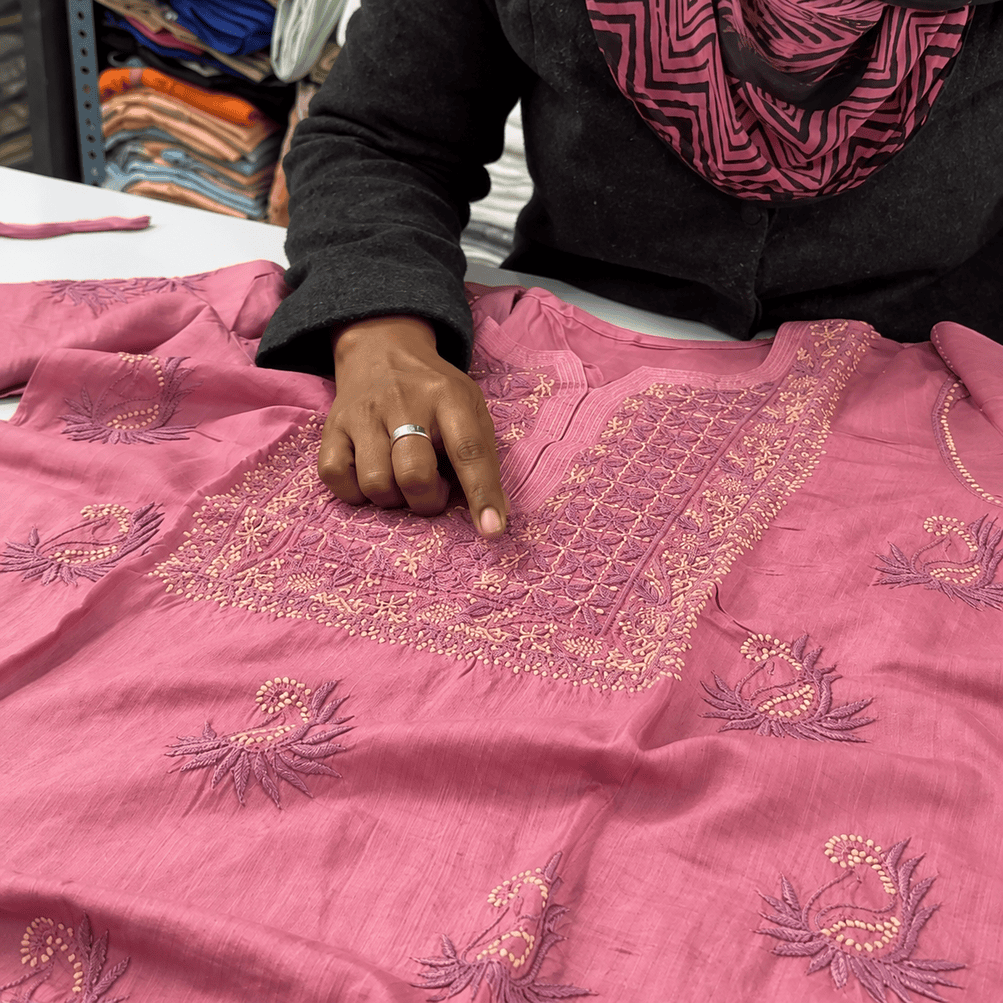
Embroidery & Finishing QC for Chikankari Products
Chikankari quality control has to respect the nature of embroidery while still protecting the approved product standard.
The team reviews the embroidery for obvious execution issues, overall workmanship, visible inconsistencies outside the approved product character and finishing problems that should be corrected before dispatch.
Because handmade Chikankari can contain natural stitch variation, the objective is not to make every hand stitch mechanically identical. The objective is to separate acceptable craft variation from a clear quality issue or departure from the approved product.
Finishing checks also include visible garment presentation and extra loose-thread cutting before packing.
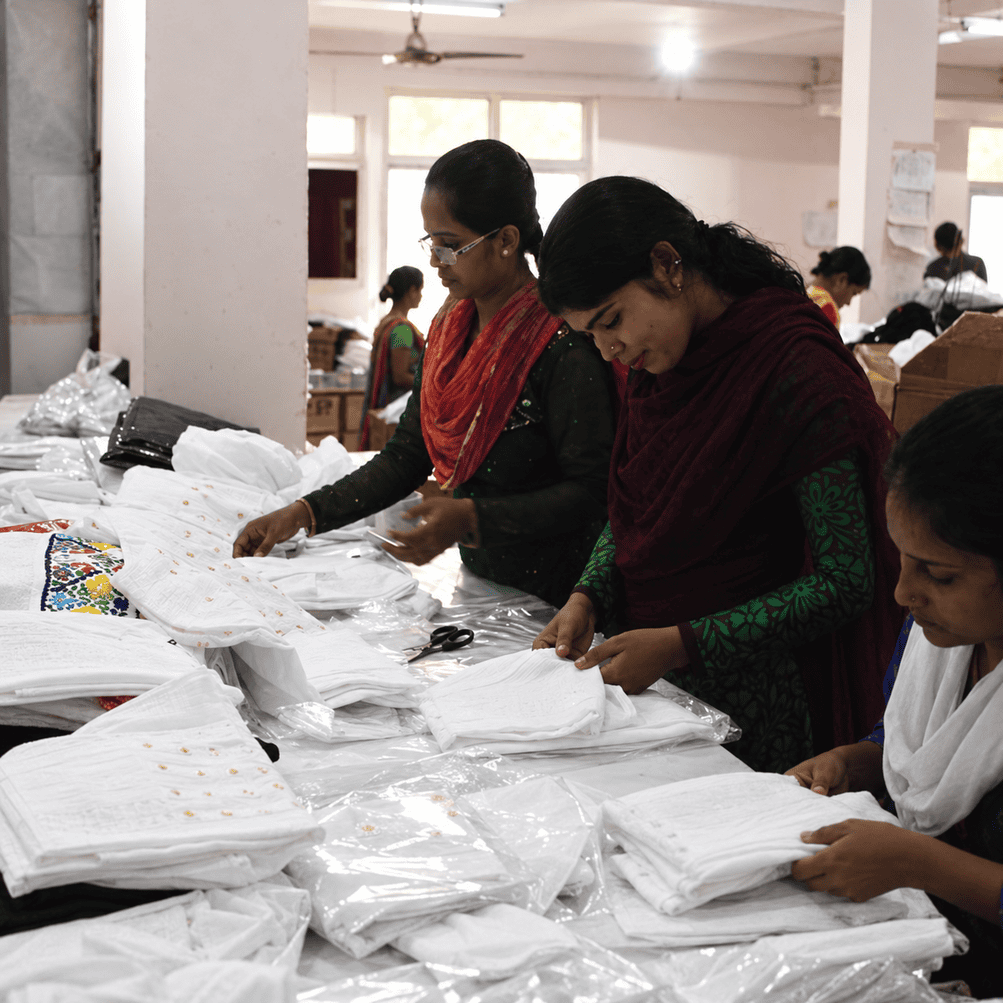
Zero-Defect Inspection Target + Extra Loose-Thread Cutting
The zero-defect parameter is used as an inspection target: if a visible defect or product-specification problem is found during QC, it is flagged for correction rather than intentionally packed as-is.
Extra loose-thread cutting is also part of final product preparation. This matters particularly for wholesale and retail buyers because better finishing reduces the amount of corrective handling needed after the order reaches their warehouse, store or fulfilment location.
This is a QC process standard—not a claim that handmade production can never show natural variation or that no issue can ever occur.
Private-Label Orders Receive Brand-Level QC
Private-label orders require an additional brand-facing standard because the product is being prepared to reach the market under the buyer’s own name.
For private-label work, brand-level QC includes:
- Sizing: checking the product against the approved brand size requirement
- Ironing: preparing the garment for cleaner final presentation
- Packing: checking the final pack presentation against the agreed brand/order requirement
Where the order also includes buyer-specific labels, hangtags, barcodes or packaging, those items should be defined in the approved private-label brief before production and final packing.
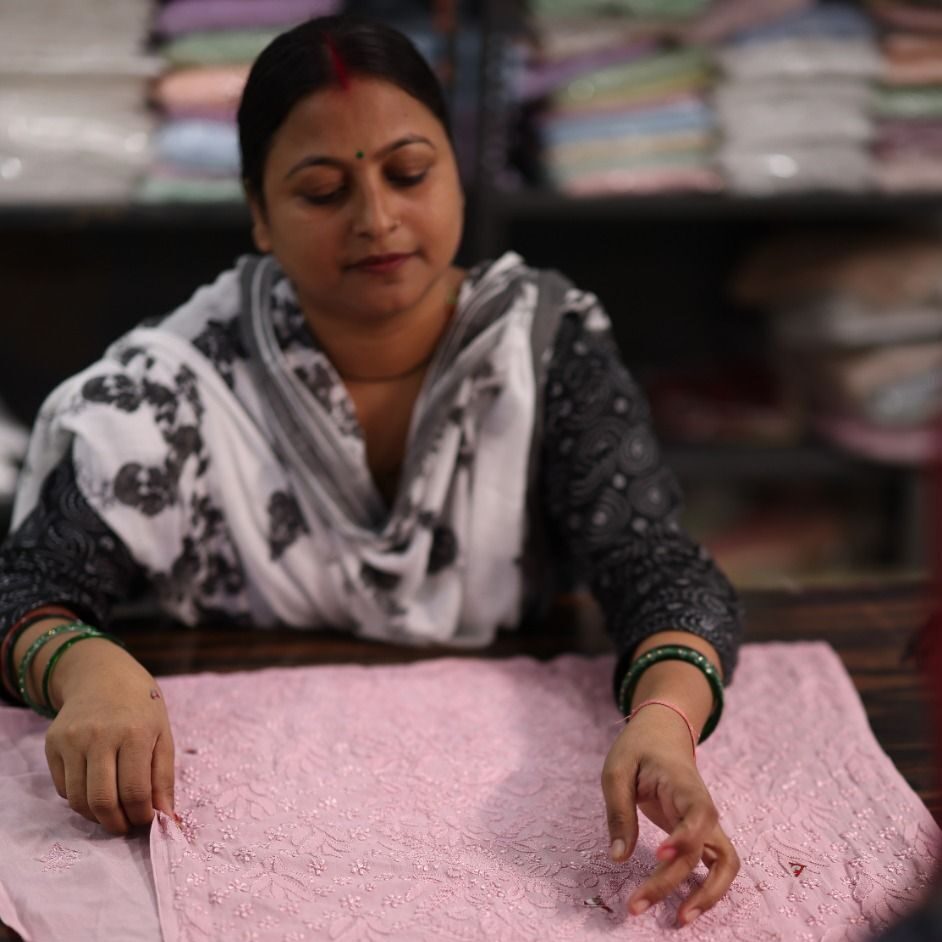
Why an In-House QC Team Helps B2B Buyers
An in-house QC team is valuable because inspection sits close to the rest of the workflow instead of becoming a separate external bottleneck.
For B2B buyers, this can help with:
- faster identification of size or finishing issues
- quicker correction before packing
- better coordination with tailoring, embroidery, packing and dispatch teams
- more consistent communication when a buyer has a specific QC brief
- quicker dispatch once the order clears the required checks
This integrated approach is especially useful for boutiques, retailers, ecommerce sellers, importers, distributors and fashion brands that need both product quality and predictable order handling.
QC Checklist for Wholesale Buyers
- Size specification: confirm the measurement chart or required size reference
- Embroidery reference: define the approved embroidery appearance or sample
- Finishing: confirm any product-specific finish requirement before bulk order
- Defect check: use the zero-defect inspection target to flag visible issues for correction
- Loose threads: extra loose-thread cutting before packing
- Three QC checkpoints: product checked repeatedly before dispatch
- Private label: sizing, ironing and packing receive brand-level QC
- Buyer-specific requirements: labels, packing or special checks should be included in the approved order brief
Chikankari Quality Control FAQs
Orders go through 3 QC checkpoints before dispatch. Across these checkpoints, the team reviews sizing, finishing, embroidery quality, visible defects and loose-thread issues.
Yes. Quality control is handled by an in-house QC team, which allows closer coordination with production, finishing, packing and dispatch.
Because the QC team works alongside the operating workflow, identified issues can be communicated and corrected without waiting for an external inspection cycle. This helps support quicker dispatch once the order clears QC.
Products are checked against the applicable size or measurement specification. For private-label orders, the approved buyer or brand size chart can be used as the relevant reference.
The QC team checks the embroidery against the approved product appearance and looks for obvious workmanship or execution issues. Natural variation in handmade Chikankari is distinguished from a clear defect or departure from the approved product.
It is used as an inspection target. Visible defects or specification problems identified during checking are flagged for correction before dispatch rather than intentionally packed as-is. It is not a claim that handmade production can never show natural variation.
Yes. Extra loose-thread cutting is included as part of finishing and quality preparation before packing.
Yes. Finishing is one of the core QC parameters and includes checking the overall product presentation and visible finish before packing.
Private-label orders receive brand-level QC with specific attention to sizing, ironing and packing, in addition to the applicable product-quality checks.
Yes. Ironing is included in the brand-level QC process for private-label orders so the garment is prepared for cleaner final presentation.
For private-label or custom requirements, a buyer-approved size chart can be used as the QC reference when it forms part of the agreed product specification.
Buyer-specific QC requirements can be discussed before the order is finalised. Any additional inspection, documentation, labels or packing requirements should be included in the approved order brief.
For private-label orders, packing is specifically part of brand-level QC. For wholesale orders, final product reconciliation and pack readiness are checked before dispatch.
Share the product reference, size or measurement specification, embroidery or sample reference, quantity, private-label requirements and any buyer-specific finishing, label or packing standards.