Authentic Lucknow Chikankari | Wholesale | Manufacturing | Private Label SHOP NOW

Authentic Lucknow Chikankari | Wholesale | Manufacturing | Private Label SHOP NOW
B2B MATERIAL + EMBROIDERY GUIDE
Chikankari Fabrics & Embroidery: Matching the Right Base With the Right Work
Fabric and embroidery cannot be selected independently. The same Chikankari stitch can look softer, sharper, denser or more delicate depending on the weave, opacity, drape and weight of the base fabric.
For wholesale buyers, this combination affects much more than appearance. It influences comfort, garment structure, embroidery cost, finishing, care, target retail price and whether the product feels everyday, contemporary, premium or occasion-led.
Three Things Decide How Chikankari Finally Looks
01. Fabric Structure
Weight, weave, transparency, surface texture and drape determine how much support the fabric gives to the embroidery and how the completed garment moves.
02. Stitch Character
Bakhiya, Tepchi, Phanda, Murri, Keel, Kangan, Jaali and other techniques create different levels of shadow, outline, texture and dimension.
03. Embroidery Density
The amount of embroidered coverage changes labour input, visual richness, garment weight, flexibility and price positioning—even when the fabric and stitch family remain the same.
How Major Fabrics Change the Embroidery
These descriptions are practical buying directions rather than fixed rules. Exact suitability should be confirmed on the actual embroidered sample because fabric qualities can differ even when the trade name is the same.
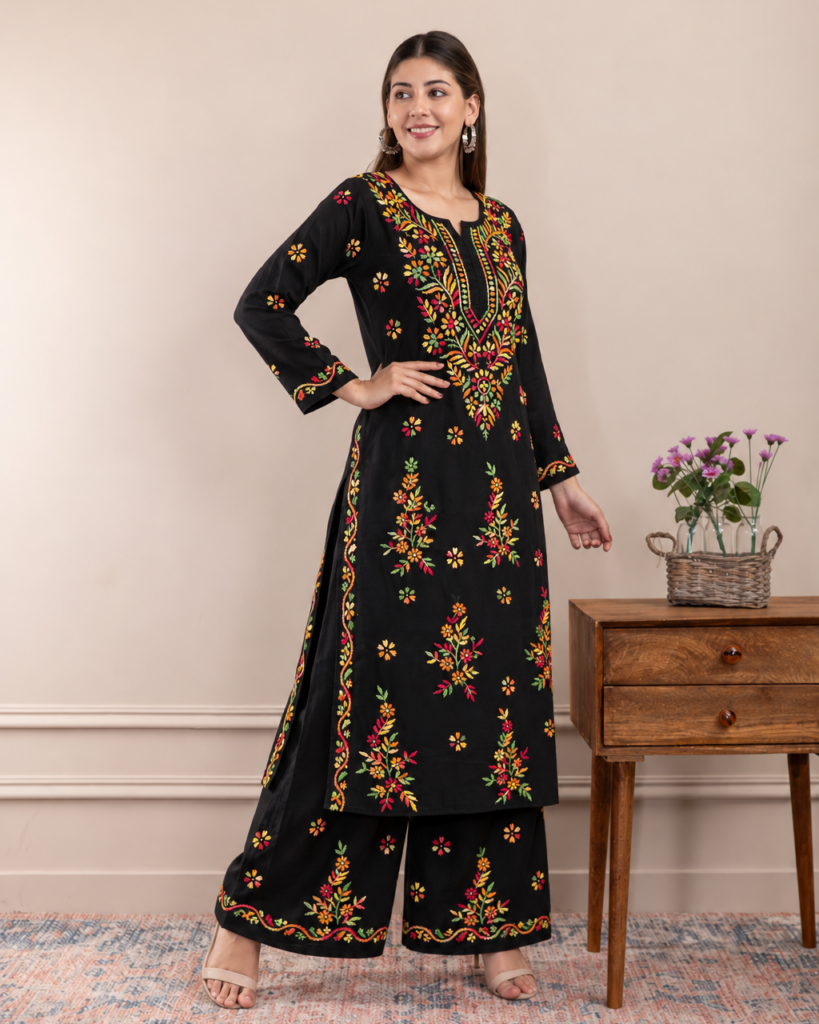
Cotton
Cotton can provide a stable, breathable base for both lighter and more visible embroidery. Depending on the weave, it can support everyday straight kurtas, shirts, co-ords and repeatable retail ranges.
Watch: weight, opacity, shrinkage and how dense embroidery affects stiffness.
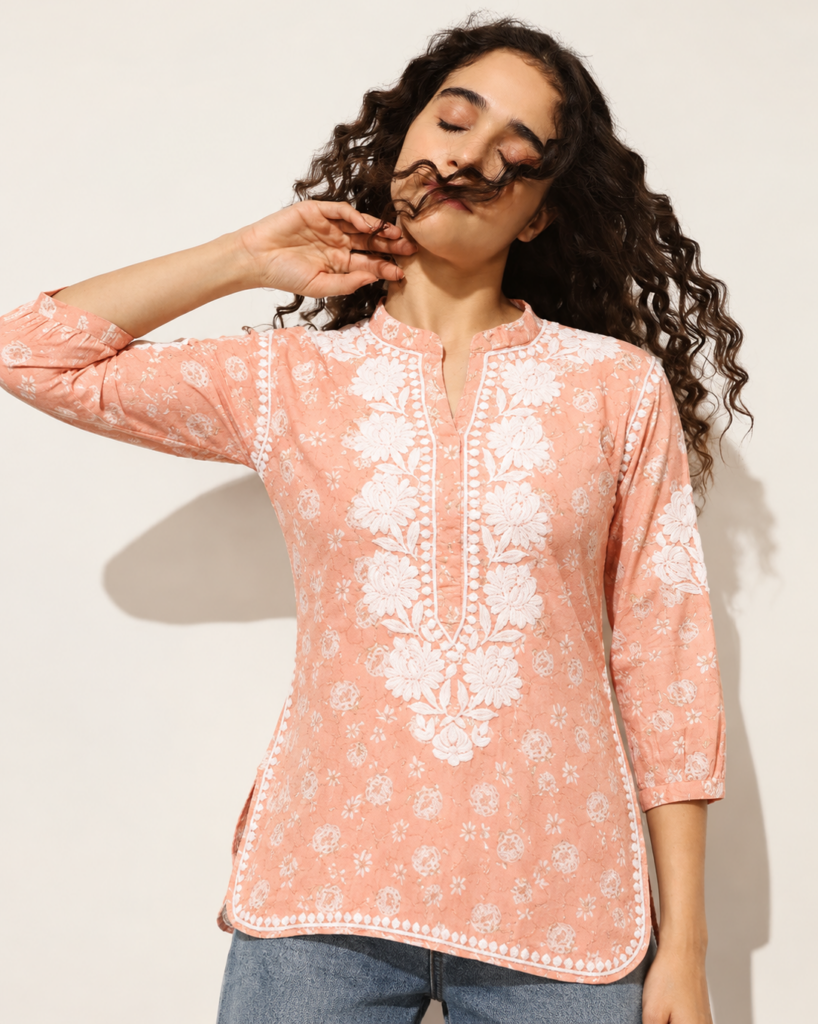
Mulmul & Fine Cotton
Fine, soft and lightweight fabrics can make shadow work and delicate motifs appear especially refined. They suit summer-led and softer silhouettes where airiness is part of the product value.
Watch: transparency, lining requirement and whether heavy coverage overpowers the fine base.
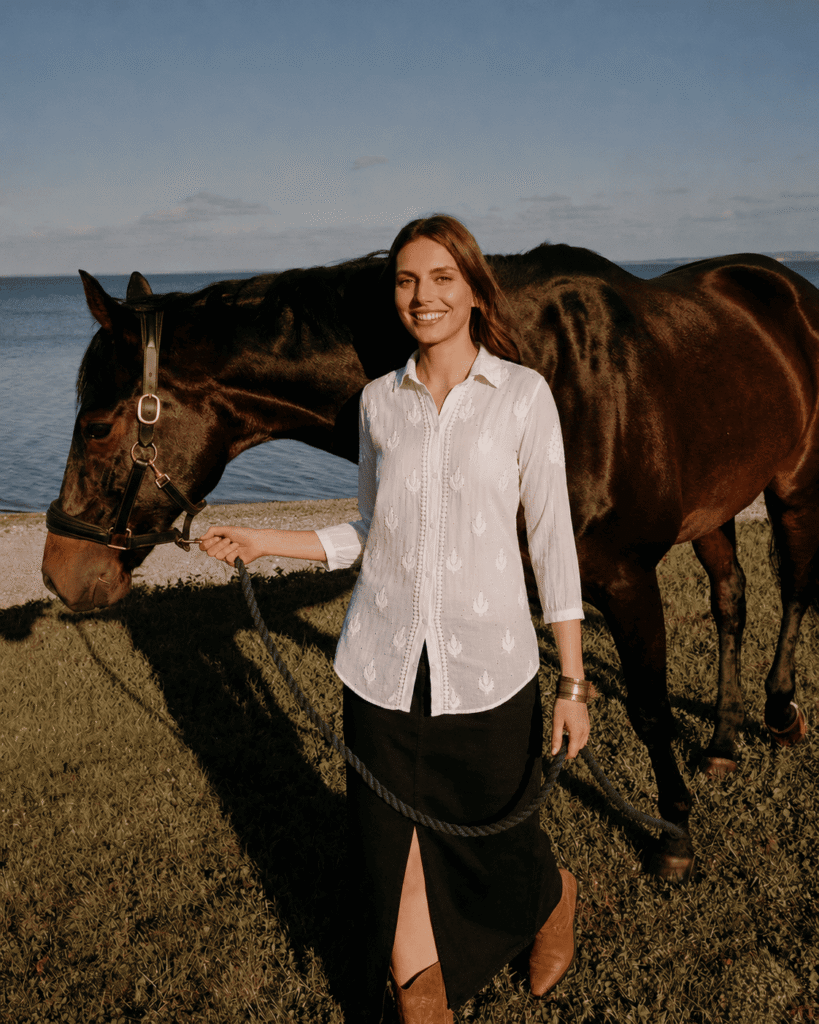
Muslin
Muslin can create a clean, refined surface for detailed Chikankari and works well where the collection needs softness without losing visual definition.
Watch: actual construction and composition; the word ‘muslin’ is used for different qualities in the market.
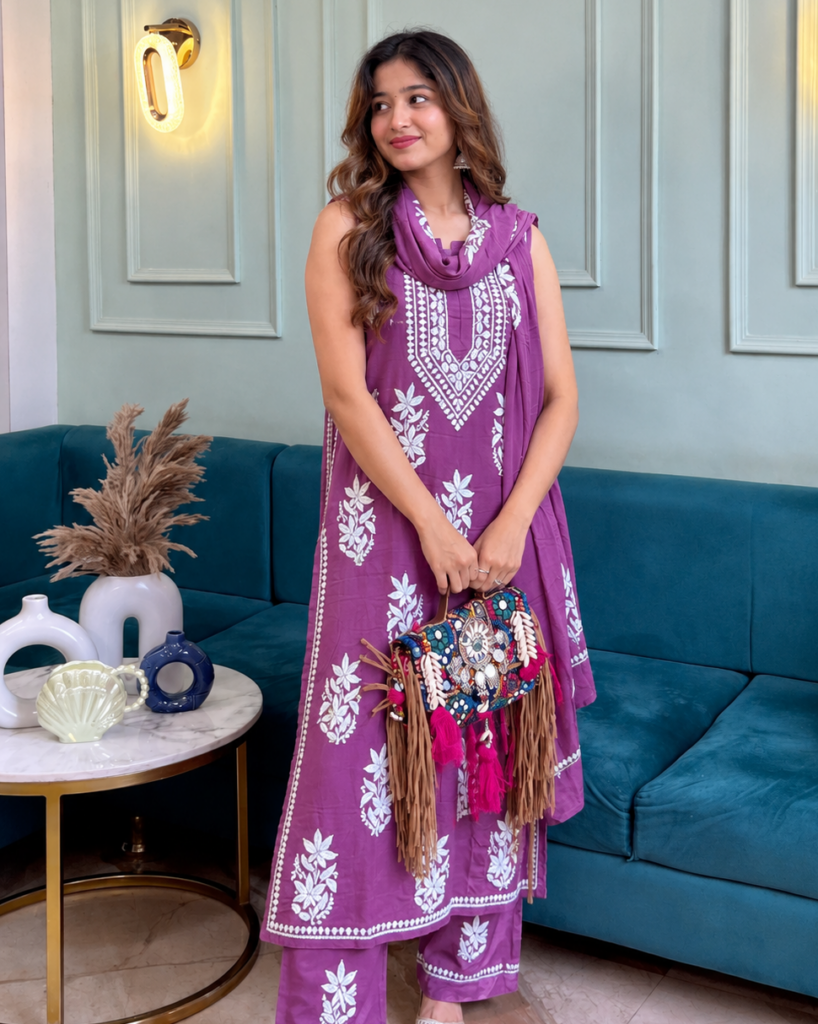
Modal
Modal offers a smooth, fluid fall that can make Chikankari feel more contemporary and movement-led. It works well for softer kurtas, sets, dresses and relaxed silhouettes.
Watch: embroidery weight, dye behaviour and whether the finished fabric still retains the required drape.
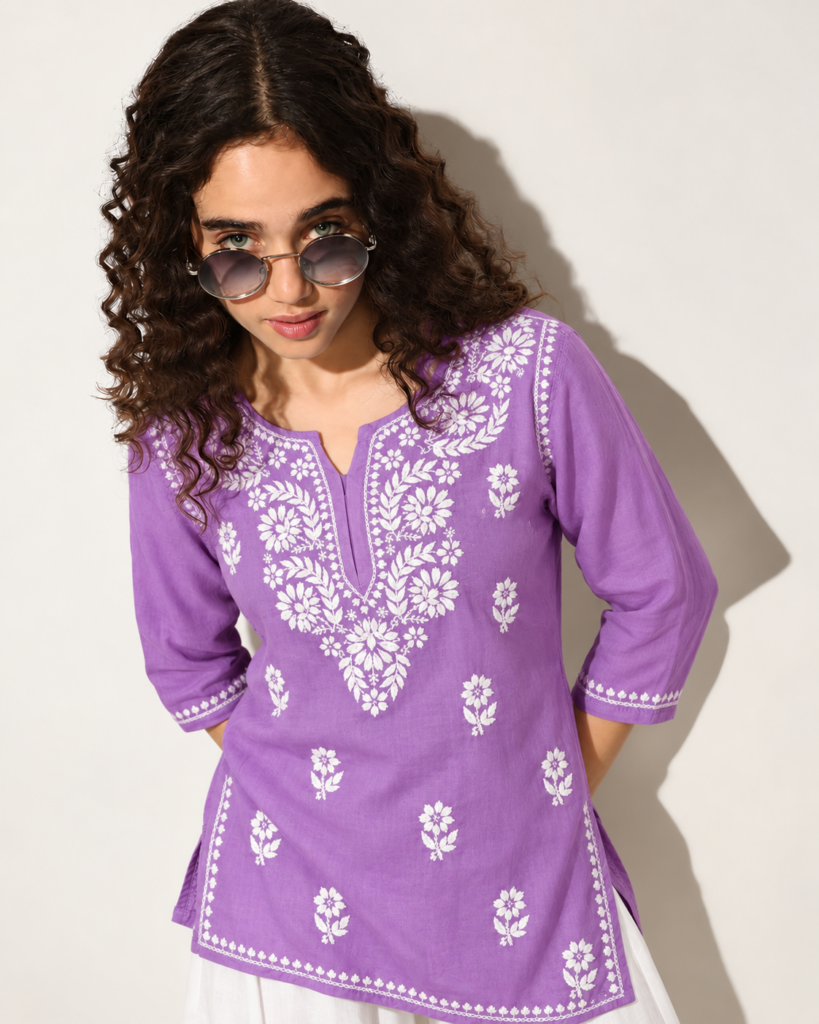
Rayon / Viscose
Rayon and viscose can give Chikankari a softer, fluid commercial feel suitable for fashion-led everyday ranges, short kurtas, co-ords and sets.
Watch: exact fabric quality, shrinkage, dyeing and consistency across repeat production.
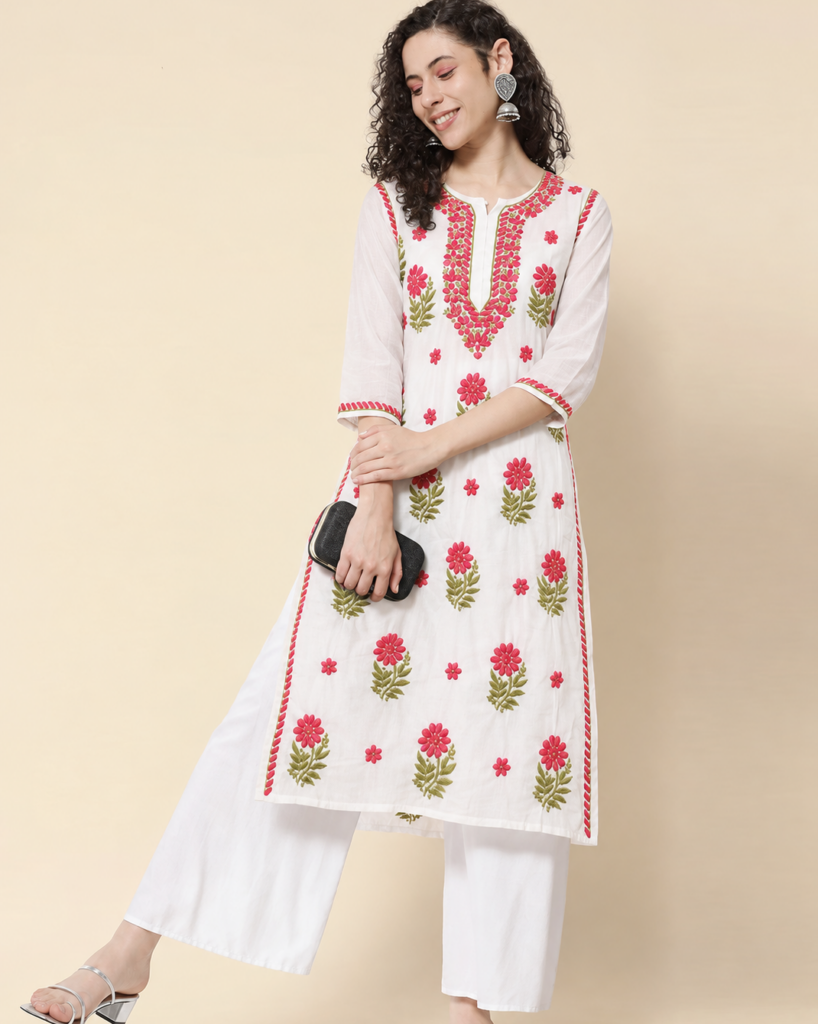
Chanderi
Chanderi’s light structure, subtle sheen and translucency can give Chikankari a more premium or festive expression. Embroidery can appear sharper because of the fabric’s visual crispness.
Watch: fibre composition, lining, snag risk and whether the embroidery density suits the delicate base.
Embroidery Density Changes the Commercial Product
Light Embroidery
Smaller motifs, limited placements or lighter stitch coverage preserve more of the original fabric behaviour. Useful for entry price points, summer products and easy everyday wear.
Medium Embroidery
Balanced coverage across the front, neckline, sleeves or borders can create stronger visual value while still keeping the garment commercially wearable and repeatable.
Dense / Statement Embroidery
Higher coverage increases visual richness and labour input, but can also increase weight, stiffness and finishing complexity. It is usually better suited to premium or occasion-led positioning when the fabric can support it.
Fabric × Embroidery Suitability Matrix
| Fabric Direction | Embroidery Approach | Useful Product Position | Buyer Watch-Out |
|---|---|---|---|
| Structured / medium cotton | Light to dense, depending on weave | Everyday to premium | Heavy work can reduce softness |
| Mulmul / fine cotton | Light to medium, delicate shadow/textural work | Summer, feminine, lightweight | Transparency and distortion under heavy work |
| Muslin | Light to medium detailed work | Refined everyday / premium casual | Quality varies by construction |
| Modal / Rayon / Viscose | Light to medium; place density carefully | Contemporary, fluid, fashion-led | Dense work can affect drape |
| Chanderi | Controlled light to medium, premium placements | Festive / premium | Sheerness, snagging and lining |
| Georgette / sheer fluid bases | Usually lighter, carefully stabilised work | Occasion, sarees, layered styles | Distortion and excess embroidery weight |
This is a sampling guide, not a manufacturing rule. The final combination should be approved on the exact fabric quality, colour, garment pattern and embroidery layout intended for production.
How Stitch Choice Interacts With Fabric
Some Chikankari techniques depend strongly on fabric behaviour. Shadow work such as Bakhiya is more visible on fabrics that allow the underlying thread effect to show through. Raised details such as Phanda and Murri add texture and need a base that can hold dimensional work without puckering. Jaali depends on controlled manipulation of the weave, so the actual fabric construction matters as much as the fabric name.
Outline and linear stitches such as Tepchi, Zanzeera, Keel and Kangan can help define motif structure, while a combination of shadow, outline and raised stitches creates visual depth across a single garment.
For buyers: instead of asking only “Which stitch is this?”, also ask “Which stitches are used, where are they placed, how dense is the work and how does that combination behave on this fabric?”
Choose the Combination by Product Category
Kurtis & Everyday Kurtas
Prioritise comfort, repeatability and washability. Cotton, suitable rayon/viscose, modal, muslin and mulmul can all work depending on price and silhouette. Keep embroidery weight aligned with everyday use.
Kurta & Suit Sets
Think of the top, bottom and dupatta as one merchandising system. The main garment may carry stronger Chikankari while the supporting pieces use lighter detail to control cost and keep the set visually balanced.
Sarees & Dupattas
Drape is critical. Fabric movement, border weight, pallu or end-panel work and overall embroidery coverage should be assessed together so the textile remains wearable and falls correctly.
Co-ords, Tops & Contemporary Styles
Use fabric and embroidery strategically rather than covering every surface. Placement-led Chikankari on fluid or structured bases can create a cleaner, more modern product for D2C and fashion-led retail.
Premium & Occasion Products
Chanderi, selected muslin qualities, Georgette and other premium bases can support more elevated positioning when embroidery density, lining, finishing and care are developed together.
Wholesale Sample Approval Checklist
Before approving a fabric + embroidery combination for bulk production, review the actual finished sample rather than approving fabric and embroidery separately.
- Fabric identity: composition, construction, weight, opacity and colour.
- Stitch mix: which Chikankari techniques are actually used and where.
- Embroidery density: light, medium or dense coverage and how it changes the fabric.
- Puckering/distortion: check around dense motifs, seams and borders.
- Drape: confirm that the finished garment still moves as intended.
- Reverse-side finish: inspect thread handling and finishing.
- Garment measurements: recheck dimensions after embroidery, washing and finishing.
- Care: make sure the final combination can be cared for realistically by the target customer.
- Repeatability: confirm that the same fabric quality, thread direction and embroidery specification can be referenced on reorders.
Go Deeper: Fabric, Stitches, Authenticity & Care
Chikankari Fabric & Embroidery FAQs
There is no single fabric that is always best. A more stable cotton or suitable structured base may tolerate higher embroidery density better than a very fine or fluid fabric, but the final decision should be made from the actual embroidered sample.
Bakhiya is especially visible when the base fabric allows the thread effect beneath or through the fabric to influence the front appearance. Fine cottons, Mulmul, Muslin and other suitably translucent fabrics can show this effect well, but exact results depend on construction and thread.
It can be possible, but dense work may alter the drape and softness that make these fabrics commercially attractive. Sampling should confirm that the embroidery weight does not make the garment feel stiff or distorted.
Fabric weave, opacity, colour, surface texture, thickness and drape change how stitches are seen and how the thread interacts with the base. The same motif can therefore feel delicate on one fabric and much stronger on another.
Approve the fabric direction first, but do not lock the final product only from a plain swatch. The safest commercial approval is the actual embroidered, washed and finished sample because processing can change drape, measurements and appearance.
Use more than a generic term such as ‘Chikankari work’. Where relevant, specify the fabric quality, stitch mix, embroidery placement, approximate density or coverage, thread direction, colour and approved sample reference.