Authentic Lucknow Chikankari | Wholesale | Manufacturing | Private Label SHOP NOW

Authentic Lucknow Chikankari | Wholesale | Manufacturing | Private Label SHOP NOW
B2B PACKAGING, ORDER CHECKING & DISPATCH
Wholesale Order Packing & Dispatch for Chikankari B2B Orders
Packaging is the final product-control stage before a wholesale order leaves Lucknow. The objective is not only to protect the garment—it is to make sure the buyer receives the correct style, colour, size, quantity and pack structure in a form that is easy to count, store, distribute or resell.
This page explains how Chikankari wholesale orders should move through final checking, folding, individual protection, SKU/size identification, carton preparation, dispatch handover and shipment confirmation.
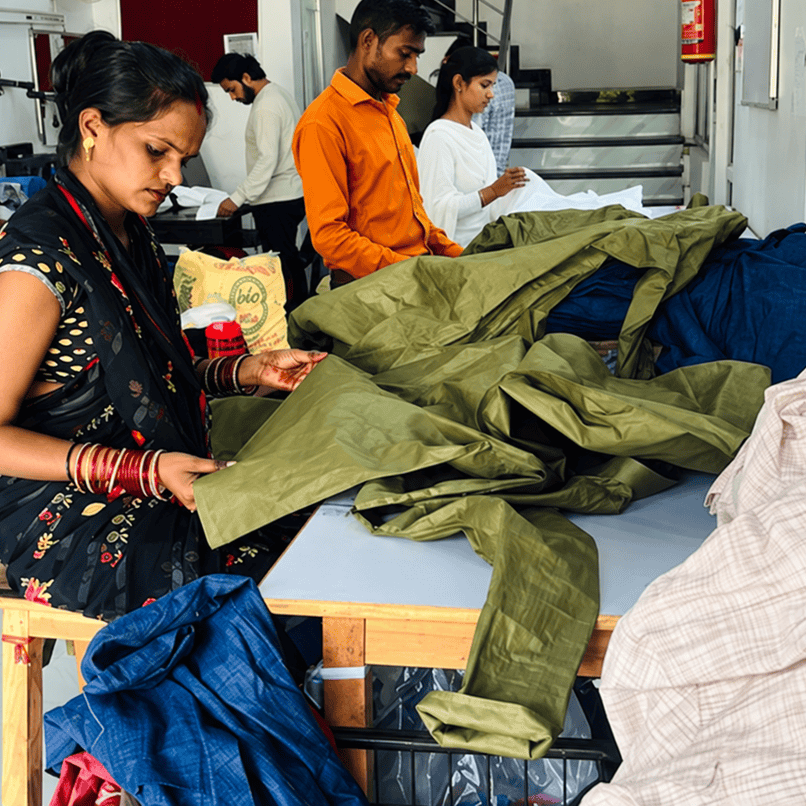
Current Dispatch Timelines
Dispatch timing depends on how the product is being sourced. These are dispatch timelines—the time before the order is handed over for shipment—not the courier or freight transit time after dispatch.
READY STOCK
Dispatch in 5 Days
For confirmed ready-stock wholesale orders, dispatch is done within 5 days.
CUSTOM ORDERS
Dispatch in 20 Days
For custom wholesale orders, the current dispatch timeline is 20 days.
MAKE TO ORDER
Dispatch in 60 Days
For make-to-order production, the current dispatch timeline is 60 days.
How a Wholesale Order Moves From Final QC to Dispatch
01. Order Reconciliation
Match the final pieces against the order: style, colour, size, quantity and included components.
02. Final Product Check
Check finishing, visible marks, loose threads, measurements or agreed quality points before packing.
03. Pack & Label
Fold, protect and identify garments so the buyer can distinguish products, sizes and quantities after receipt.
04. Cartonize & Dispatch
Prepare cartons, reconcile the packed count and hand the completed shipment to the agreed courier or logistics route.
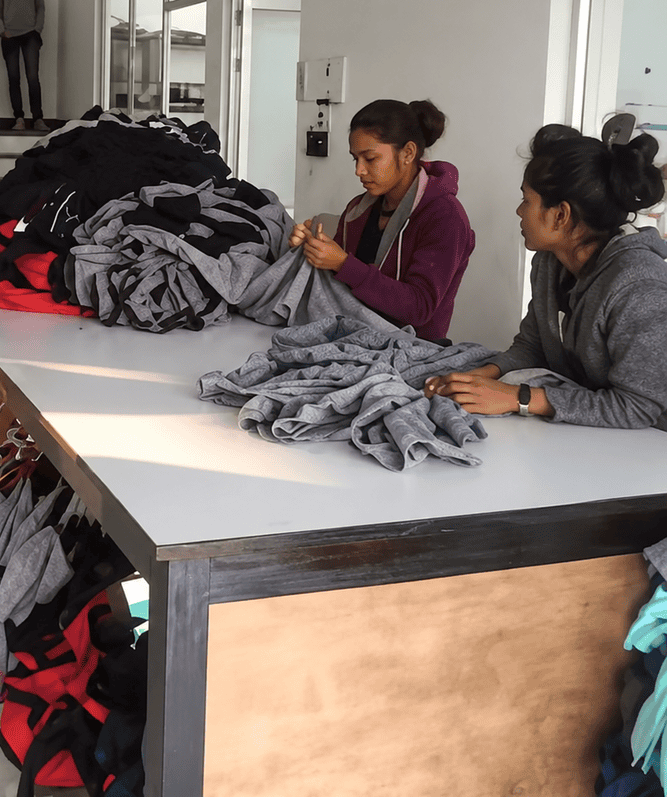
Packaging Starts With the Garment, Not the Carton
The first purpose of wholesale packaging is product protection and correct identification. Each garment should be prepared so that embroidery, fabric, embellishment and set components are not unnecessarily crushed, mixed or confused during handling.
Depending on the actual product and agreed order, the packing workflow can consider:
- clean folding appropriate to the silhouette
- protection for embroidery or delicate surfaces where required
- keeping kurta, bottom, dupatta or other set pieces together
- clear size and SKU identification
- colour identification where multiple variants are packed
- separating products that require different handling
Exact individual packaging material and presentation depend on the order. Custom branded packaging is available only when specifically included and confirmed in the quotation.
Packing Information Buyers Should Define Before the Order Is Closed
Product Identification
SKU/style code, colour, size, set contents and any buyer reference that must remain visible after packing.
Retail / Brand Requirements
Buyer-supplied labels, barcodes, hangtags, price stickers or other retail information should be specified before production or packing where applicable.
Warehouse Requirements
Inner-pack ratio, carton assortment, carton numbering or store-wise segregation should be agreed if the buyer requires a specific receiving workflow.
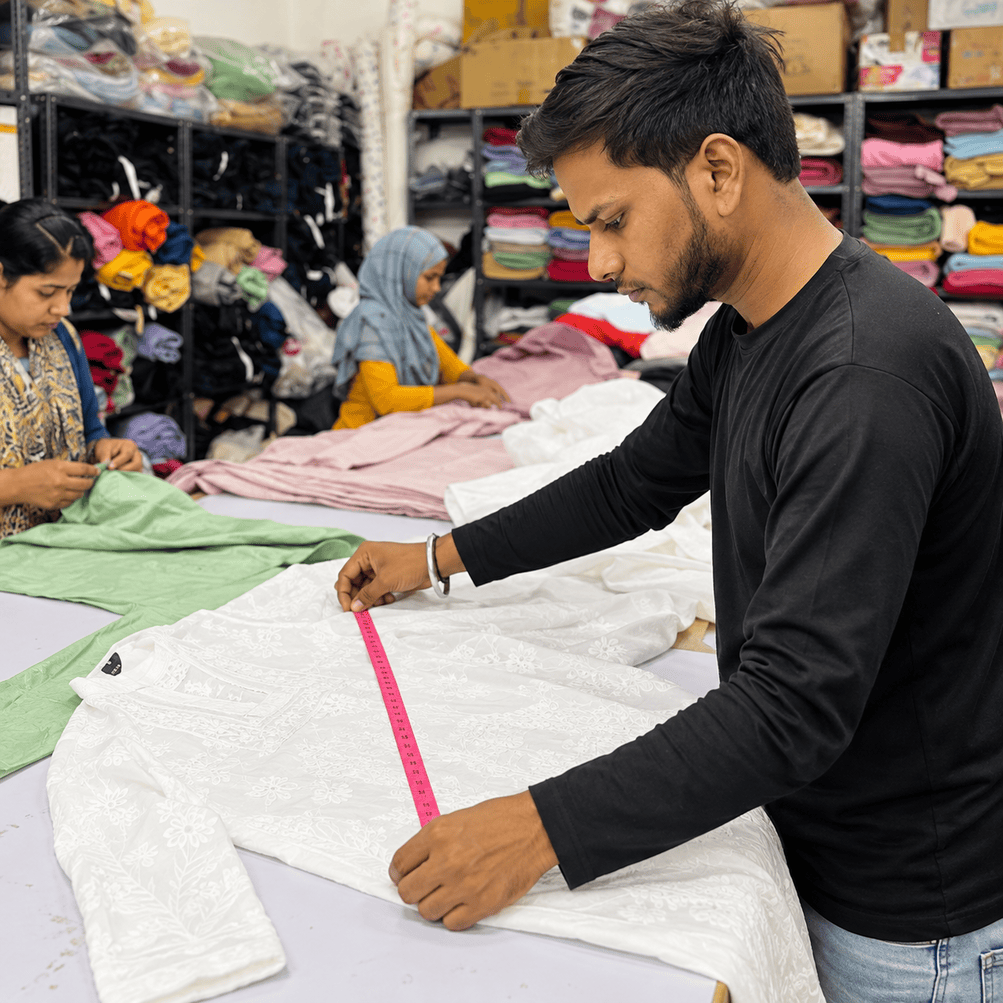
Size, SKU & Label Accuracy Matters at Scale
For a small order, one wrong size is an inconvenience. For a multi-SKU wholesale order, incorrect labels or mixed cartons can create receiving, inventory and customer-service problems across the buyer’s business.
Before cartons are closed, the packed product should be reconciled against the order or approved packing instruction. Where applicable, check:
- style / SKU reference
- colour
- size
- quantity
- set pieces
- buyer-supplied label or barcode
- inner-pack quantity
- carton allocation
Buyer-specific barcodes, labels, hangtags or retail-ready packaging must be confirmed as part of the actual order scope.
Carton Packing: Protect the Goods and Make Receiving Easier
The outer carton has two jobs: protect the packed garments during handling and make the shipment understandable when it reaches the buyer.
A useful carton record can include carton number, style/SKU range, size or colour grouping where relevant, piece count, gross weight, dimensions and shipment reference.
For larger B2B orders, carton-level organisation can reduce receiving time because the buyer can reconcile cartons before opening every individual packet.
Custom carton printing, special packing materials, store-wise cartons, ratio packs or buyer-specific marking are subject to confirmation for the specific order unless agreed in the quotation.
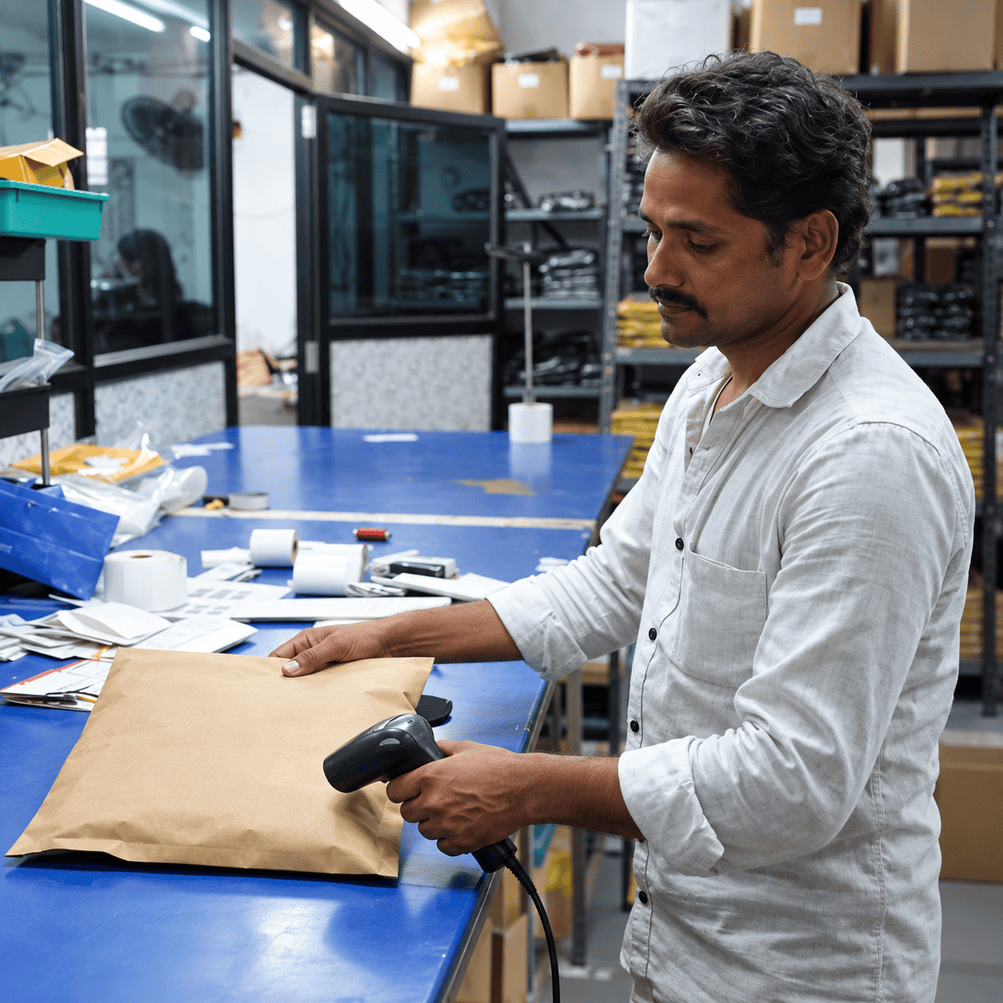
Dispatch Means the Order Has Been Handed Over for Shipment
The dispatch timeline ends when the packed order is handed over to the agreed courier, transport or freight route. Delivery happens after dispatch and depends on the destination and logistics service.
At dispatch, the buyer should have the relevant shipment reference or tracking information when available, along with confirmation of the number of cartons or packages handed over.
For international shipments, export documentation and destination customs clearance can add separate processing stages after the dispatch milestone.
Packing Checklist Before Dispatch
- Order reconciliation: style, colour, size, quantity and included pieces
- Final garment check: finishing, visible defects and agreed QC points
- Folding: product prepared without unnecessary crushing or mixing
- Individual protection: appropriate to the actual garment and order
- Identification: SKU/style, colour and size clearly distinguishable
- Buyer requirements: agreed labels, barcodes, hangtags or retail marks applied where applicable
- Inner packing: ratio or grouped packs checked where specified
- Cartons: piece count, carton number and shipment allocation reconciled
- Weight/dimensions: recorded when required for shipping
- Dispatch: courier/logistics handover and shipment reference confirmed
Wholesale Packing & Dispatch FAQs
Ready-stock wholesale orders are dispatched within 5 days.
Custom wholesale orders have a current dispatch timeline of 20 days.
Make-to-order wholesale production has a current dispatch timeline of 60 days.
No. Dispatch is the time before the packed order is handed over to the courier, transporter or freight route. Transit and final delivery happen after dispatch and depend on the destination and logistics service.
The packing workflow focuses on order reconciliation, product protection, folding, size/SKU identification, carton preparation and final dispatch checking. Exact packing material can vary by product and order requirements.
Buyer-specific size, SKU, colour, inner-pack or carton grouping can be discussed as part of the order requirement. Exact packing structure should be agreed before dispatch.
Buyer-specific labels, barcodes, hangtags and retail-ready requirements can be discussed, but the exact scope, artwork, quantity and cost are subject to confirmation for the actual order.
Custom branded packaging can be discussed, but availability, materials, MOQ, artwork, cost and lead-time impact are subject to confirmation before the order is finalised.
Where a product includes multiple pieces such as kurta, bottom or dupatta, the packing process should keep the correct components together and identify the complete set before carton packing.
Carton count and packing information can be recorded for dispatch. Buyer-specific carton matrices, ratio packs or warehouse formats should be agreed as part of the order requirement.
Carton numbering can be part of an organised B2B dispatch workflow. Any buyer-specific carton marks or special labelling should be confirmed before final packing.
The packed count should be reconciled against the order and any applicable SKU, size, colour, set-component, label or inner-pack requirements should be checked before final dispatch preparation.
Tracking or shipment reference is shared when available after the order has been handed over to the agreed logistics route. Tracking format depends on the courier, transporter or freight arrangement.
Share the SKU/style structure, sizes, colours, quantity, label or barcode artwork where applicable, inner-pack or carton ratio, carton marks and any retail or warehouse receiving instructions before the order is packed.