Authentic Lucknow Chikankari | Wholesale | Manufacturing | Private Label SHOP NOW

Authentic Lucknow Chikankari | Wholesale | Manufacturing | Private Label SHOP NOW
B2B SOURCING GUIDE
Chikankari Wholesale Buying Guide: From Sourcing Brief to Repeat Order
This guide is built for boutiques, retailers, ecommerce sellers, resellers, fashion brands, importers and distributors evaluating Chikankari wholesale from Lucknow.
A good wholesale buying decision is not simply about finding the lowest price. It is about matching the right sourcing model, product mix, fabric, embroidery, sizing, quality level, quantity and reorder plan to your customer and sales channel.
The Wholesale Buying Process in 7 Decisions
- Define your buyer and market.
- Choose the sourcing model: ready stock, wholesale selection, custom manufacturing or private label.
- Build the first assortment.
- Evaluate fabric, embroidery and construction.
- Approve sizing, samples and quality standards.
- Confirm commercial terms, quantities and logistics.
- Track sell-through and plan reorders.
The sections below explain how to make each decision without overbuying, under-specifying the product or relying on assumptions.
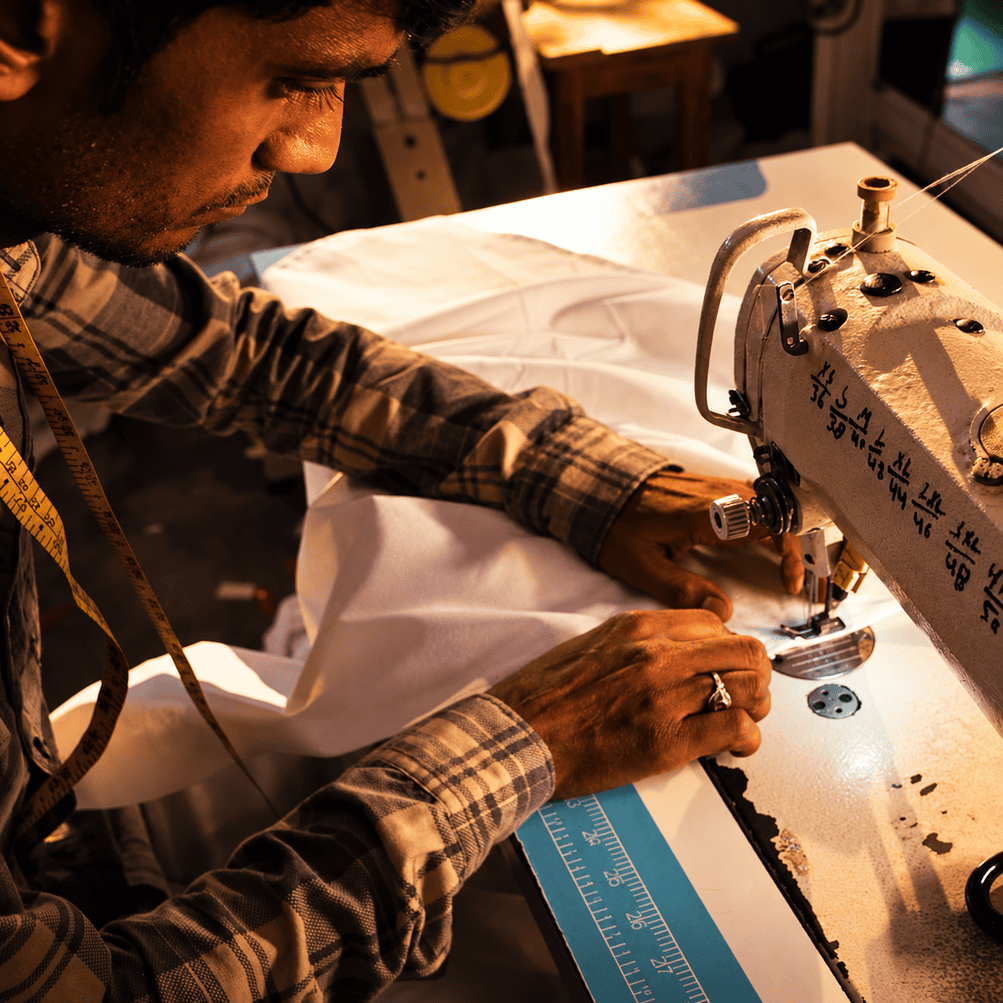
01. Start With the Customer, Not the Catalogue
Before comparing products, write a short buying brief. The clearer the brief, the easier it becomes to choose suitable categories, fabric quality, embroidery level, price positioning and quantities.
Define:
- Who is the end customer?
- Which country or city are you selling in?
- Is the collection everyday, festive, premium, modest, contemporary or occasion-led?
- What retail price range are you targeting?
- Which channel will sell the products—boutique, marketplace, ecommerce, social commerce or wholesale distribution?
- Do you need immediate stock or a developed collection?
A boutique serving premium occasion customers should not buy the same assortment as an online reseller competing mainly on price and fast-moving everyday styles.
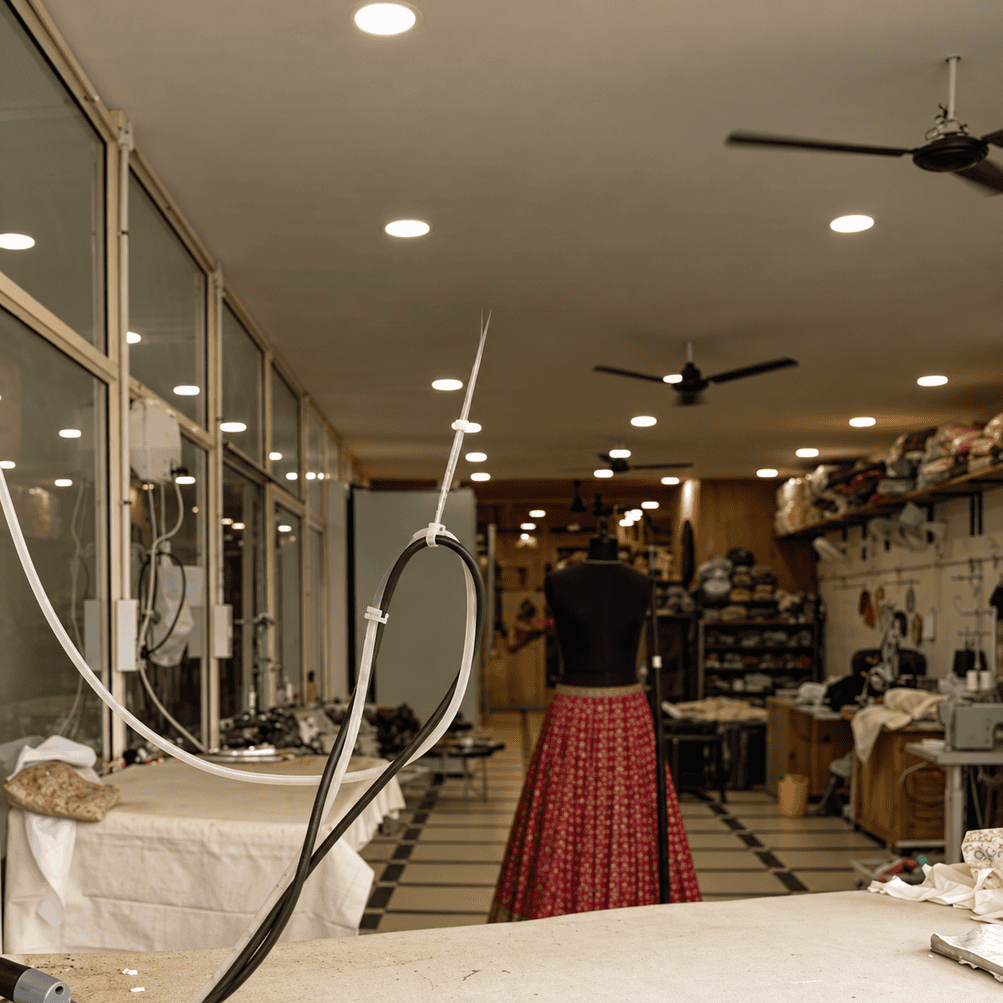
02. Choose the Right Sourcing Model
Ready stock is useful when speed and immediate assortment matter most. Wholesale selection works when you want to curate from existing products. Custom manufacturing suits buyers who need changes in fabric, silhouette, embroidery, sizing or colour. Private label is appropriate when the finished product needs to align with your own brand identity and specifications.
Do not use custom manufacturing simply because it sounds more premium. Development adds decisions, sampling and specification work. For a first order, the simplest sourcing route that genuinely fits the business is often the best starting point.
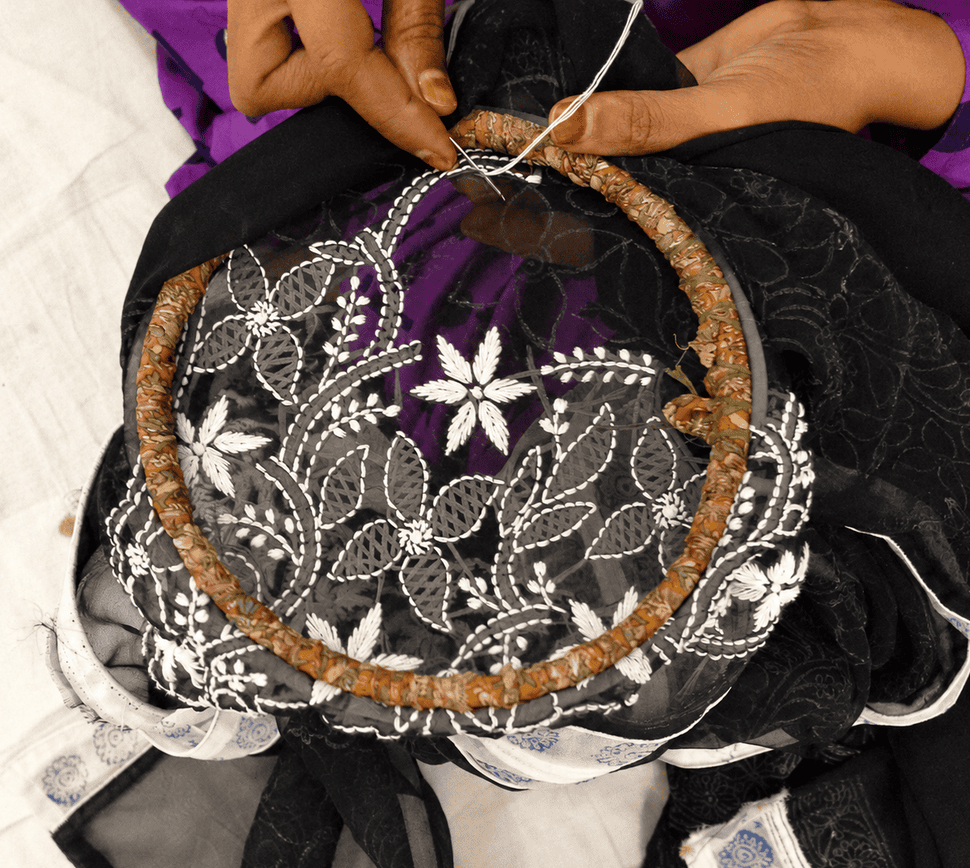
03. Evaluate Fabric and Embroidery Together
Do not judge a Chikankari product only by the front photograph. Fabric quality and embroidery method jointly determine drape, comfort, perceived value and durability.
When reviewing a style, ask:
- What is the exact fabric or fabric family?
- How transparent, fluid or structured is it?
- Is the Chikankari hand embroidered, machine embroidered or a combination?
- Which stitches or stitch effects are being represented?
- Is the embroidery light, medium or dense?
- Does the fabric still fall correctly after embroidery?
- Will the product need lining or an inner?
The safest commercial approval is the actual embroidered and finished sample, not a plain swatch viewed separately from the embroidery.
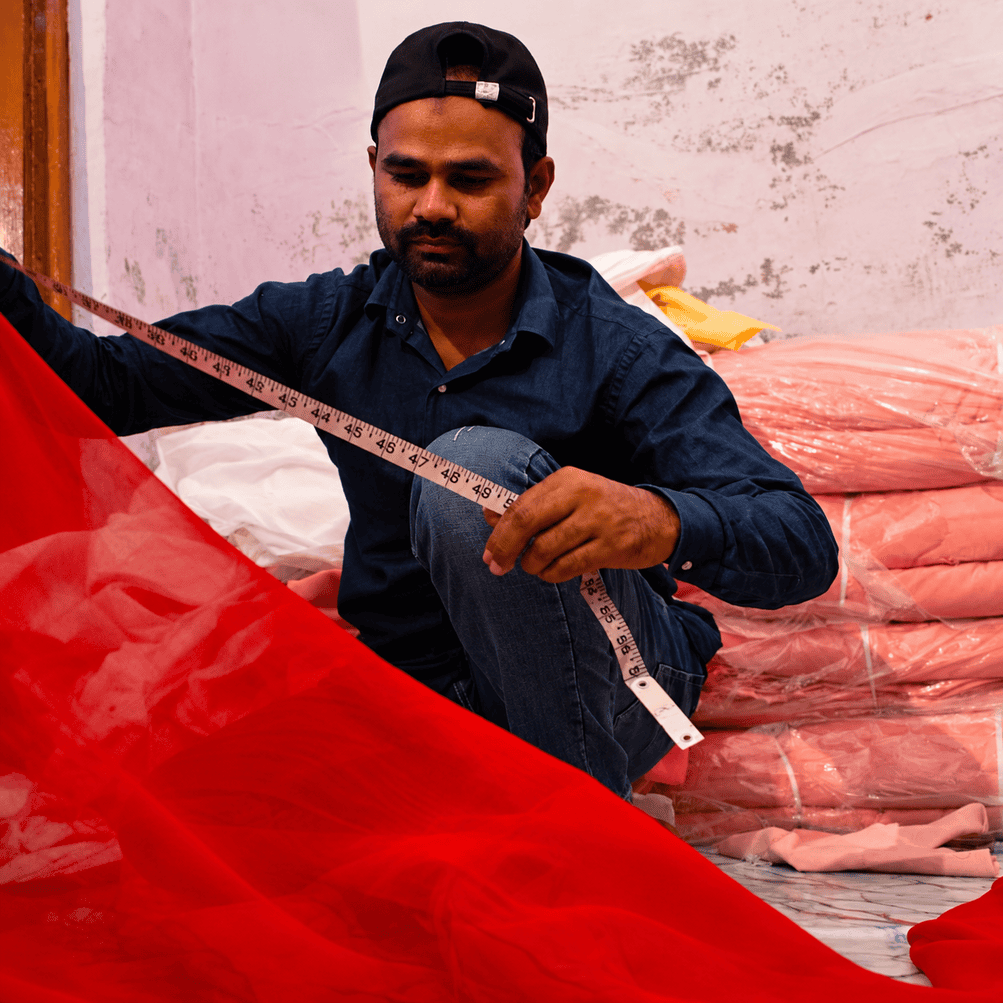
04. Sample Before You Scale
A sample is not only for checking whether you like the design. It is the opportunity to create a measurable benchmark for bulk production.
Review the sample for:
- fabric and colour
- embroidery execution and density
- front and reverse finish
- garment measurements and fit
- stitching and seam construction
- neckline, sleeves, length and proportions
- lining or inner where relevant
- loose threads, marks, damage and finishing
- wash/care behaviour where applicable
Once approved, keep the sample and measurement sheet as the reference for production QC and future reorders.
05. Confirm the Commercial Order Before Production or Dispatch
Before paying or authorising production, make sure the quotation and order confirmation clearly describe what you are buying.
Confirm:
- style/SKU or product reference
- fabric and colour
- embroidery type and agreed level of work
- size breakdown
- quantity by style, colour and size
- unit price and applicable taxes/charges
- sample or specification reference for custom products
- label, tag and packing requirements where applicable
- estimated production or dispatch schedule
- shipping method and destination
- payment terms
MOQ, pricing, production timing, payment terms and freight can vary by product and order structure, so they should be confirmed on the actual quotation rather than assumed from a generic website statement.
How to Build a Smarter First Chikankari Wholesale Assortment
The objective of a first order is not to predict every future bestseller. It is to learn which product combinations your customers respond to with controlled inventory exposure.
Core Sellers
Use commercially accessible products that clearly represent your brand or store positioning and can generate useful sell-through data.
Visual / Premium Pieces
Add a smaller number of stronger embroidery or premium-fabric pieces that create visual interest and help test higher price acceptance.
Controlled Variety
Test a sensible mix of silhouettes, colours and price points without spreading the order across so many SKUs that no style receives enough inventory to produce meaningful sales data.
Wholesale Buying Checklist
| Before Order | What to Confirm |
|---|---|
| Buyer brief | Market, customer, channel, product type and target price position |
| Sourcing model | Ready stock, wholesale selection, custom or private label |
| Product | Style, fabric, colour, embroidery, lining and finish |
| Size | Measurement chart, grading and size breakdown |
| Sample | Approved physical/reference sample for custom work |
| Quality | Workmanship, measurements, finishing and acceptable variation |
| Commercials | Quantity, price, taxes/charges and payment terms |
| Logistics | Packing, dispatch timing, shipping method and destination |
| Reorder | Availability, repeatability and reference details to preserve |
For International Chikankari Wholesale Buyers
International buyers should treat sizing, landed cost and documentation as part of the buying decision from the beginning—not as issues to solve after production.
- Confirm whether the size chart represents body or garment measurements.
- Translate Indian size labels into your own market only after reviewing actual measurements and fit.
- Confirm packaging and labelling requirements for your sales channel.
- Separate product price from freight, duties, taxes and destination-side charges when calculating landed cost.
- Confirm the shipping method and required commercial documentation for the actual order and destination.
- For private label, provide your own tech pack or market-specific size chart where possible.
Chikankari Wholesale Buying FAQs
Start with your customer and market, then confirm the sourcing model, product category, fabric, embroidery method, size measurements, sample, quantity, commercial terms and logistics. Do not make a bulk decision from product photographs alone.
Ready stock or an existing wholesale selection is usually simpler when speed and market testing matter most. Custom manufacturing makes more sense when you have a clear design, fit, fabric, embroidery or branding requirement that existing products cannot meet.
Compare like with like. Fabric quality, embroidery method and density, garment construction, lining, finishing, size range, order quantity and packing can all change the cost. The lowest unit price may represent a materially different product.
For custom or private-label production, an approved sample is strongly recommended because it creates the benchmark for fabric, embroidery, fit, measurements and finishing. For ready stock, buyers can still request relevant product evidence or samples when required.
There is no universal number. The first assortment should create enough product variety to test customer response without spreading inventory so thinly across many SKUs that the sales data becomes difficult to interpret. Base the mix on your budget, channel and expected volume.
Use clear specifications, inspect product and embroidery evidence, approve samples where relevant, confirm measurements and commercial terms in writing, start with a controlled order and preserve the approved references for reorders.
Share your country, buyer type, product categories, approximate quantity, sourcing model, preferred fabrics or styles, target price position and required timeline. For custom work, include reference images or a tech pack where available.
Track sell-through by style, size, colour and price point. Reorder proven products before stock becomes critical, and keep SKU, fabric, colour, measurement and sample references so the supplier can identify what needs to be repeated.