Authentic Lucknow Chikankari | Wholesale | Manufacturing | Private Label SHOP NOW
Authentic Lucknow Chikankari | Wholesale | Manufacturing | Private Label SHOP NOW

Our standard manufacturing workflow is Fabric Sourcing → Designing → Cutting & Stitching → Chapai → Hand Embroidery → Washing → First QC → Dyeing if required → Embellishment if required → Final QC → Finishing & Packing.
The exact route can vary by product, fabric, colour treatment, embellishment and whether the order is ready stock, custom or make-to-order.
The base fabric is selected for drape, transparency, weight, end use, embroidery compatibility and target price.
Silhouette, measurements, motif direction, embroidery placement, colour and construction details are defined.
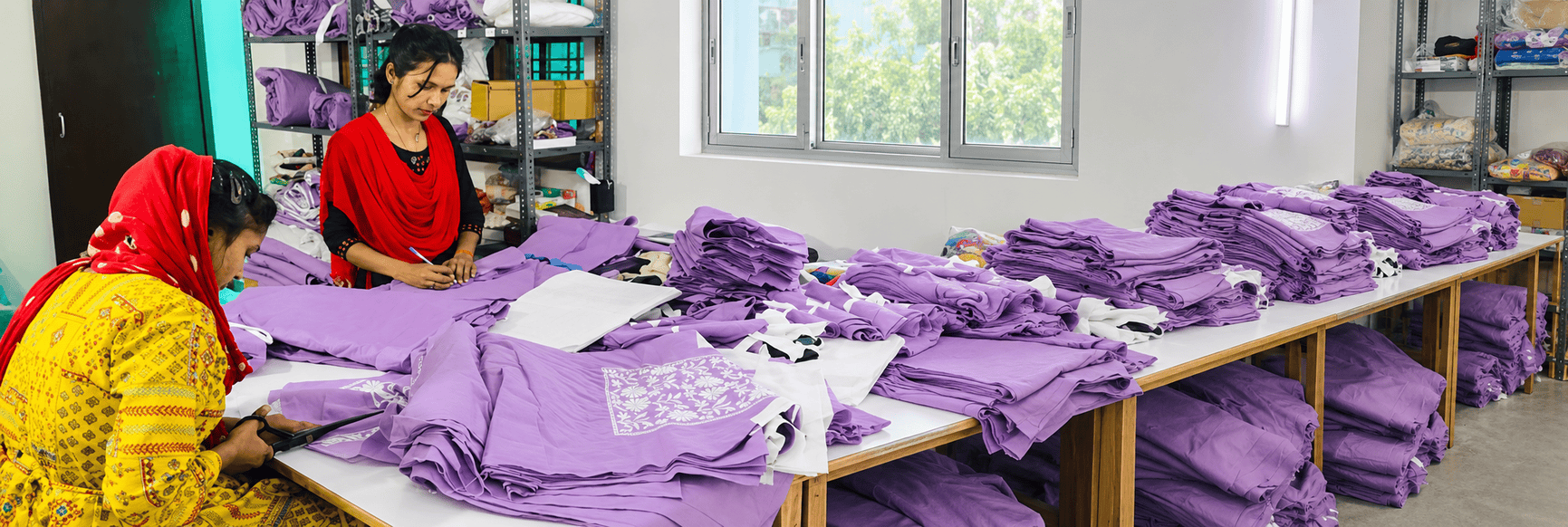
Fabric is cut and stitched to the approved pattern and measurement specification.
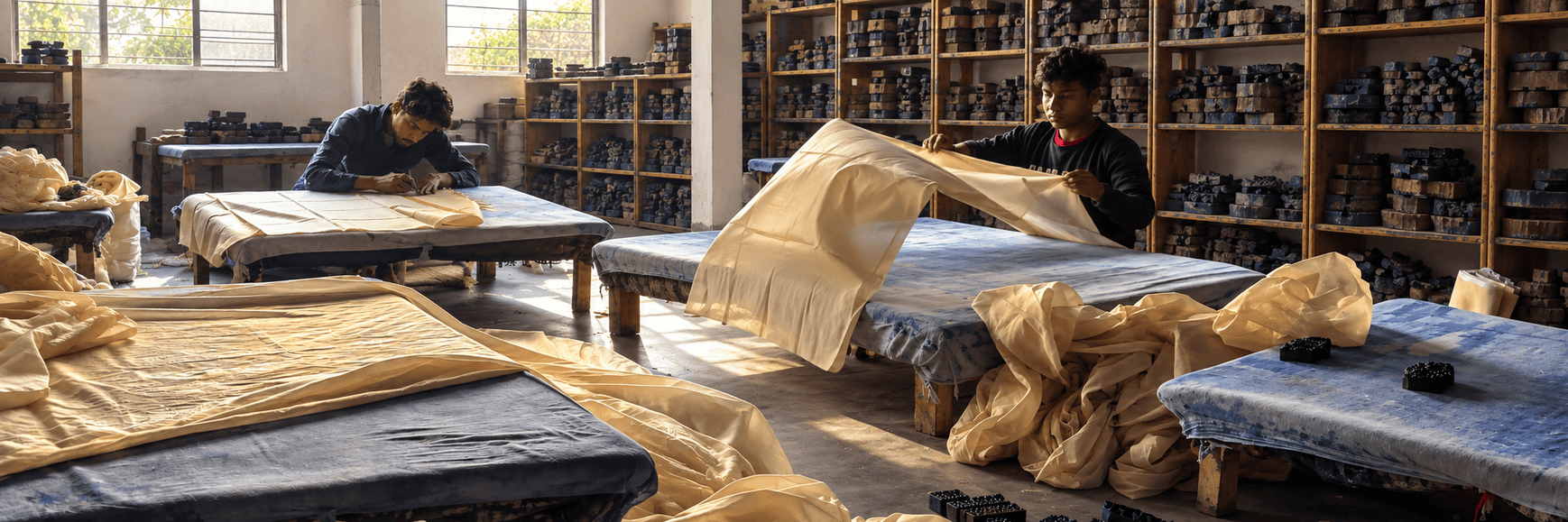
The embroidery design is marked onto the fabric to guide motif placement and stitch execution.
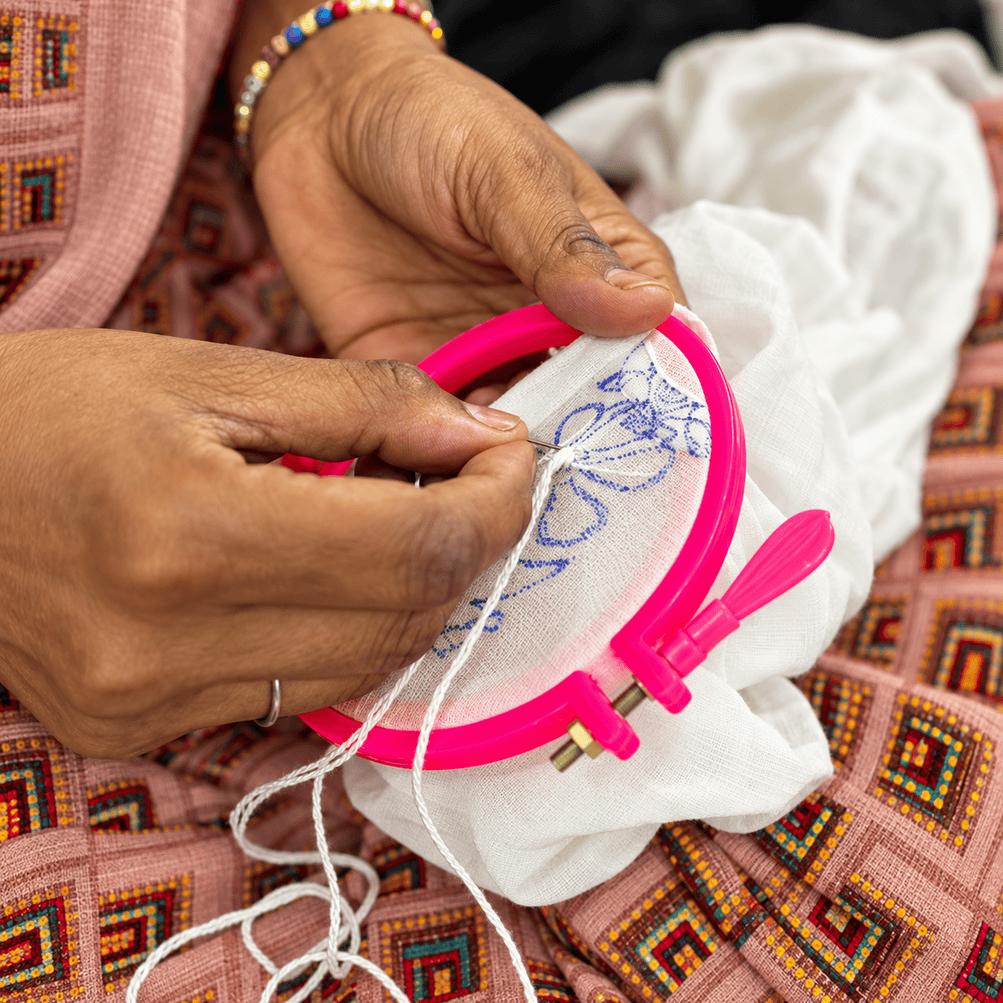
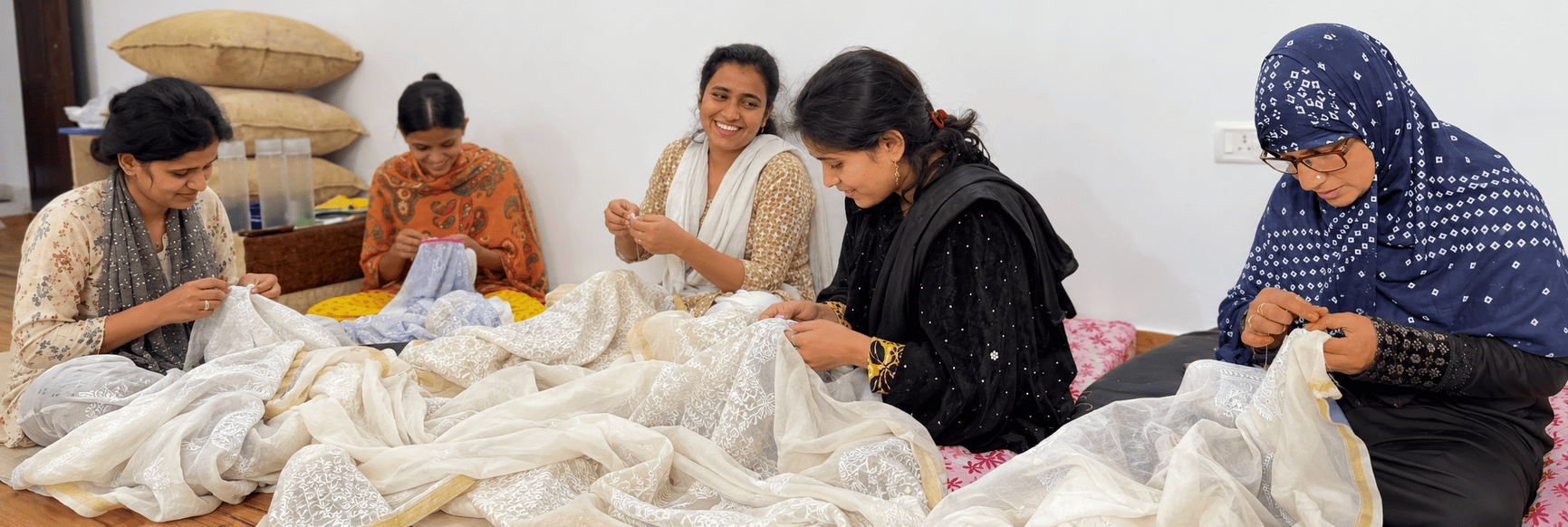
Artisans execute the approved Chikankari stitch, motif and placement direction by hand.
Temporary Chapai marks and process residue are removed so the cleaned embroidery can be evaluated.
Sizing, finishing, embroidery quality, visible defects and loose-thread issues are checked.
Dyeing is used only when the product or collection requires colour development.
Additional embellishment is optional and follows the approved product brief.
The product is rechecked against the approved sizing, finishing, embroidery and defect parameters.
Loose threads are cut, garments are finished, identified, folded, packed and prepared for dispatch.
Chapai transfers the embroidery design onto the fabric so the artisan has a guide for motif scale, placement and flow. For custom and designer work, placement should already account for necklines, sleeves, panels, seams, borders and negative space.
Our block-printing capability helps connect sampling and production when a motif or placement needs to be tested.
After Chapai, artisans execute the approved stitch, motif and placement direction by hand. Fabric, motif scale and embroidery density must work together because different bases support different visual weights.
Natural hand variation is expected. Production control focuses on the approved visual standard, motif placement, stitch character and overall workmanship rather than machine-identical repetition.
After embroidery, washing removes temporary Chapai markings and helps reveal the cleaned embroidery for inspection. The product then enters QC.
Our QC system uses 3 checkpoints before dispatch and reviews sizing, finishing, embroidery quality, visible defect parameters and loose-thread issues.
Dyeing and embellishment are optional stages used only when the product requires them. After final QC, loose threads are cut, garments are finished, folded, identified, packed and prepared for dispatch.
Private-label orders also receive brand-level QC with specific attention to sizing, ironing and packing.
Current dispatch timelines are:
These are dispatch timelines, not courier or freight transit times after the shipment is handed over.
Our manufacturing setup connects sampling, tailoring, artisan coordination, embroidery development, block printing, dyeing services, QC, packing, R&D and dispatch in one coordinated workflow.
For boutiques and resellers, this supports faster sourcing and replenishment. For fashion brands and designers, it supports development and sampling. For importers, distributors and sourcing agents, it creates clearer accountability across production, QC, packing and dispatch.
Don't have an account yet? Sign up
No items in your cart. Go on, fill it up with something you love!
Start Shopping Now