Authentic Lucknow Chikankari | Wholesale | Manufacturing | Private Label SHOP NOW

Authentic Lucknow Chikankari | Wholesale | Manufacturing | Private Label SHOP NOW
CHIKANKARI SAMPLING & PRODUCT DEVELOPMENT
Develop, Review & Approve Chikankari Before Bulk Production
This page is for boutiques, fashion brands, designers, importers, ecommerce sellers and sourcing teams developing a Chikankari product before a bulk order.
The purpose of sampling is to turn a reference, sketch or product idea into an approved physical benchmark covering fabric, embroidery, construction, measurements, fit and finishing. It creates a clearer production reference and reduces ambiguity before larger quantities are committed.
What a Development Sample Should Help You Confirm
Fabric & Drape
Check hand feel, fall, opacity, lining requirement and whether the chosen fabric supports the intended silhouette and embroidery treatment.
Embroidery Direction
Review placement, motif balance, density, visual character and whether the embroidery suits the garment and target price position.
Fit & Measurements
Confirm garment length, chest, shoulder, sleeve, waist and other critical measurements against the approved size specification.
Construction & Finish
Review neckline, seams, closures, lining, hems, loose threads and finishing details that need to remain controlled in bulk production.
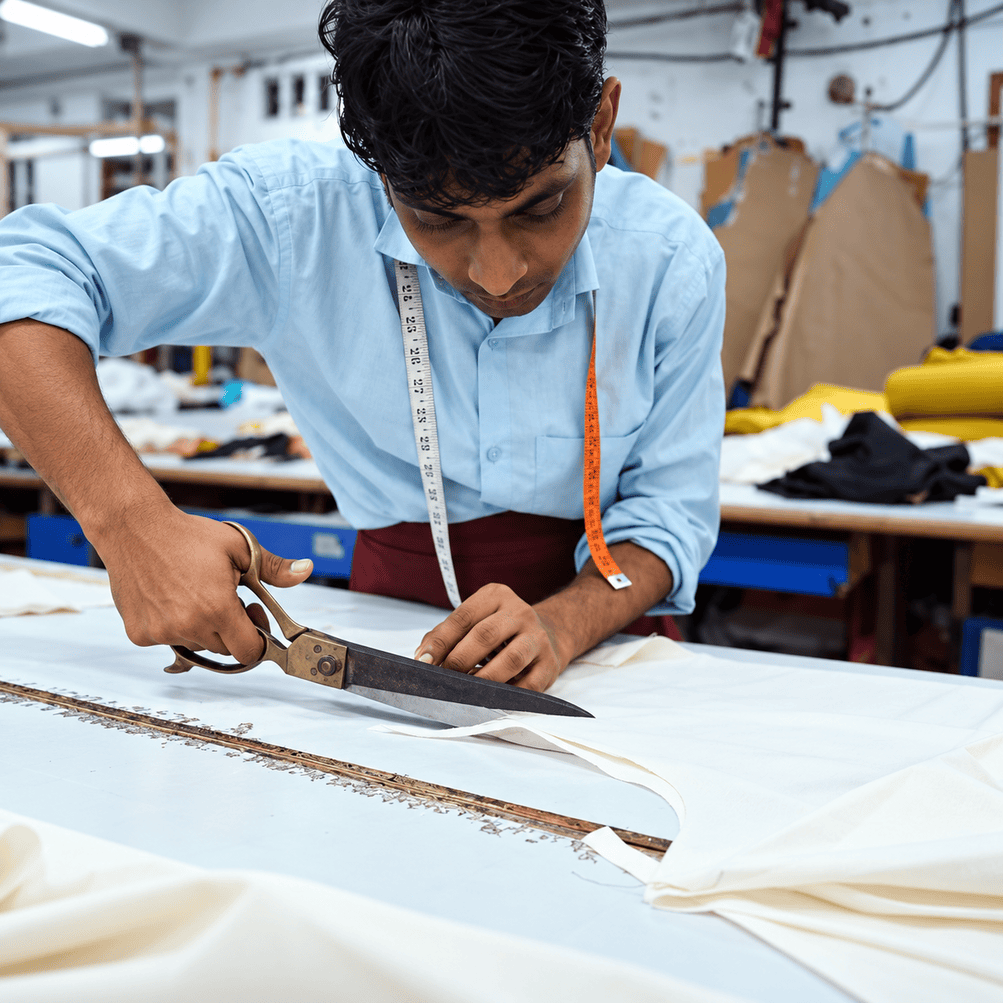
01. Start With a Complete Product Brief
A useful sample starts with a precise brief. Share enough information for the development team to understand what is fixed, what is flexible and what still needs to be explored.
Useful inputs include:
- product category and reference images or sketches
- preferred fabric or fabric family
- silhouette and construction direction
- size chart or target measurements
- embroidery reference, placement or density direction
- colour requirements
- approximate bulk quantity
- branding or packaging needs where relevant
- target market and commercial timeline
The clearer the brief, the fewer decisions need to be rediscovered after the first sample is made.
Sampling & Product Development Timeline
This is the normal sequence of work, not a promise of fixed calendar days. Exact timing depends on fabric availability, silhouette complexity, embroidery requirement, sizing, buyer feedback and the number of revisions required.
01
Brief Review & Feasibility
Product references, fabric, silhouette, sizing, embroidery direction, expected quantity and target market are reviewed. Questions that affect feasibility should be resolved here.
Buyer action: send a complete brief and identify non-negotiable requirements.
Timing: confirmed after the requirement is reviewed.
02
Fabric, Silhouette & Embroidery Direction
The development route is narrowed to an agreed material, construction and embroidery direction before the first sample is treated as a production reference.
Buyer action: approve or clarify the selected development direction.
Timing: depends on complexity and material availability.
03
First Sample Development
The first physical sample is developed against the agreed brief and available production inputs. It becomes the object the buyer can inspect rather than relying only on references.
Buyer action: remain available for specification questions during development.
Timing: project-specific.
04
Buyer Review & Consolidated Feedback
Review fabric, fit, measurements, embroidery, stitching, finishing and all agreed product details. Feedback should be consolidated into one clear revision list.
Buyer action: send written corrections with measurements or marked references where needed.
Timing: strongly affected by buyer review speed.
05
Revision & Final Sample Approval
Required corrections are incorporated where applicable. The approved version, measurements and written specification become the reference for bulk planning.
Buyer action: give written approval or one final consolidated correction list.
Timing: depends on the number and type of revisions.
06
Bulk Commercial & Production Planning
After sample approval, quantity, MOQ, pricing, payment terms, production planning, packing and shipping requirements are finalised separately.
Buyer action: confirm final order quantity and commercial terms.
Timing: confirmed before the bulk order is finalised.
What commonly extends the timeline: new fabric development, complex silhouettes, changes in embroidery direction, repeated fit revisions, new size specifications, late buyer feedback, substitutions or changes requested after sample approval.
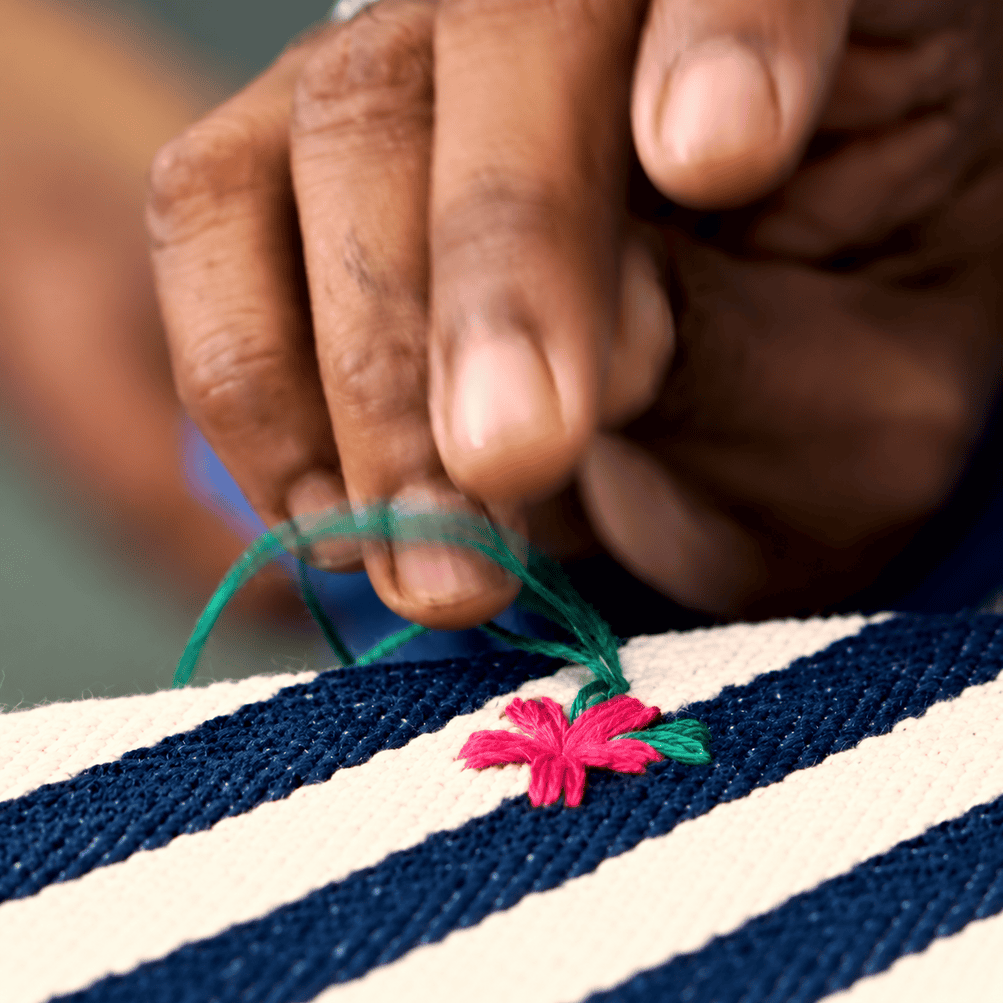
02. Review the Sample Like a Production Reference
Do not approve a sample only because it looks attractive in a photograph. Review the points that matter when the design has to be repeated:
- fabric hand feel, drape and transparency
- embroidery placement, density and balance
- critical garment measurements
- fit against the approved size chart
- neckline, sleeve, closures and lining
- stitching and finishing
- loose threads, marks and visible defects
Keep the approved sample, measurements, photographs and written corrections together. They become a stronger reference for production, QC and later reorders.
Sample Approval Is Not the Same as Bulk Order Confirmation
The approved sample establishes the product reference. The commercial order still needs separate confirmation of quantity, MOQ, price, payment terms, production planning, packing and shipping requirements.
Any material change after approval—fabric, embroidery, measurements, trims, branding or construction—should be reviewed again because it can affect feasibility, price and timeline.
Which Sampling Route Fits Your Requirement?
Existing Product Sample
Useful when you want to inspect an existing wholesale product before deciding on a larger order.
Modified Product Sample
For a current product that needs selected changes such as colour, length, sleeve, measurements or other agreed specifications.
Custom Development Sample
For a new product direction built around a reference, sketch, fabric, embroidery or measurement brief.
Private-Label Development
For buyers developing their own branded range, where product specification and applicable label or packaging requirements need to be reviewed together.

03. What to Send Before Sampling Starts
To reduce avoidable back-and-forth, send as much of the following as possible with the first enquiry:
- business or brand name and country
- buyer type
- product category
- reference images or sketches
- fabric direction
- size chart or measurements where applicable
- embroidery reference or placement direction
- approximate quantity
- branding or packaging requirements if relevant
- target timeline and destination market
If you are still deciding between ready stock, custom manufacturing and private label, start with your business requirement and approximate quantity. The sourcing route can then be matched to the project.
Frequently Asked Questions
Can I request a sample before placing a bulk order?
Yes. Sample requirements can be discussed before a larger order. The exact sample scope, charges, feasibility and timing should be confirmed for the specific requirement.
Can you develop from my reference image or sketch?
You can share references, sketches and specifications for feasibility review. Development depends on the fabric, silhouette, embroidery, sizing, quantity and other details in the brief.
How many revisions are included?
Revision requirements vary by project. The number, scope, cost and timing of revisions should be agreed before development rather than assumed.
How long does Chikankari sampling take?
There is no single duration for every product. Timing depends on fabric availability, product complexity, embroidery requirement, sizing and the number of revisions. A project-specific timeline should be confirmed after the brief is reviewed.
What happens after sample approval?
The next step is commercial and production confirmation: quantity, MOQ, pricing, payment terms, production planning, QC, packing and shipping. Any change to the approved specification should be reviewed before bulk production proceeds.