Authentic Lucknow Chikankari | Wholesale | Manufacturing | Private Label SHOP NOW

Authentic Lucknow Chikankari | Wholesale | Manufacturing | Private Label SHOP NOW
B2B FABRIC BUYING GUIDE
Chikankari Fabric Guide for Wholesale Buyers
Cotton, Mulmul, Muslin, Modal, Rayon, Chanderi, Georgette and Kota can all carry Chikankari differently. The right choice depends on embroidery density, drape, opacity, climate, target retail price and the customer you are buying for.
There is no single ‘best’ Chikankari fabric. The best fabric is the one that fits the product, market and commercial position of your collection.
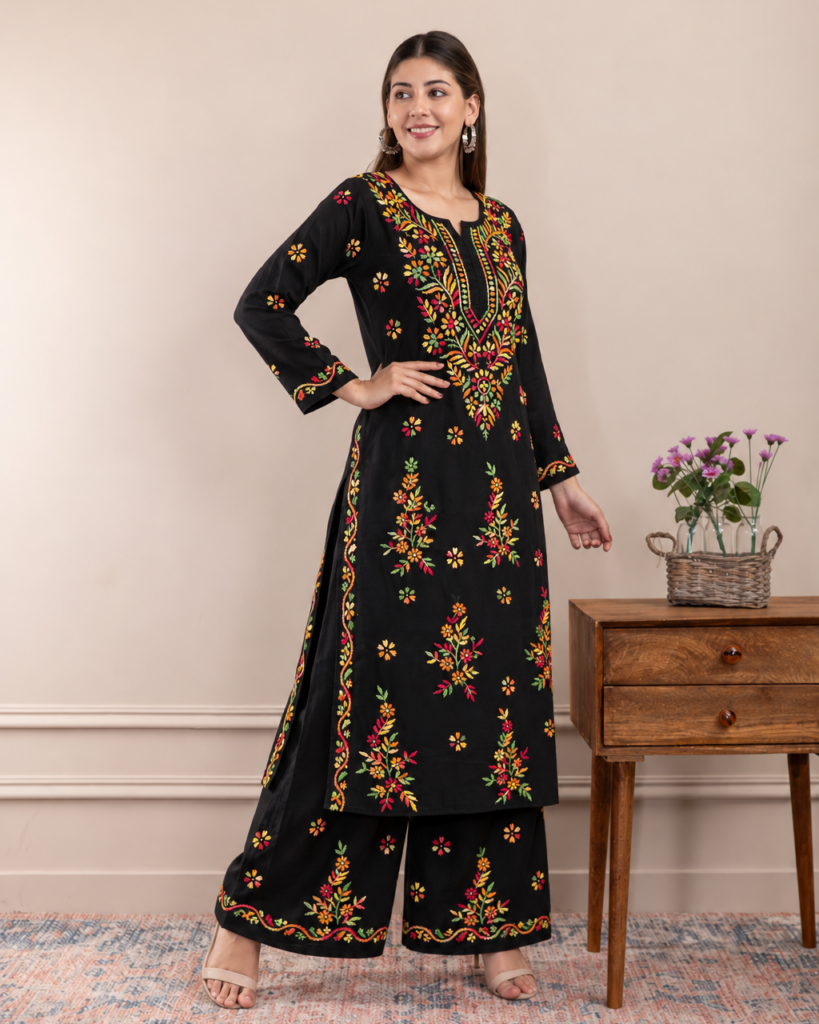
Why Fabric Choice Matters in Chikankari
Fabric is not simply the background for embroidery. It affects stitch visibility, garment structure, comfort, finishing and whether a product feels everyday, premium or occasion-led. For wholesale buyers, fabric selection is a merchandising decision as much as a manufacturing decision.
Embroidery Appearance
Sheerness, weave and surface texture change how stitches, shadow work and motif density are perceived on the finished garment.
Drape & Silhouette
A crisp base holds shape differently from a fluid base. Fabric affects how a kurta, dress, co-ord set or saree falls on the body.
Comfort & Climate
Breathability, weight, opacity and moisture behaviour influence whether a product feels right for summer, everyday wear, travel or occasion use.
Commercial Positioning
Fabric changes perceived value, care expectations, target retail price and the type of customer a collection is most likely to suit.
Core Fabrics Used for Chikankari Collections
The same embroidery can look, feel and sell very differently when the base fabric changes. These are some of the most useful fabric families for wholesale buyers to understand before building an assortment.
Cotton
A versatile natural-fibre base used widely for everyday Chikankari. Depending on the weave, it can feel crisp, soft, light or more structured. It works across kurtas, sets, tops and other repeatable retail categories.
Buyer note: confirm the actual cotton quality, weight, opacity, shrinkage behaviour and repeat availability rather than buying on the word ‘cotton’ alone.
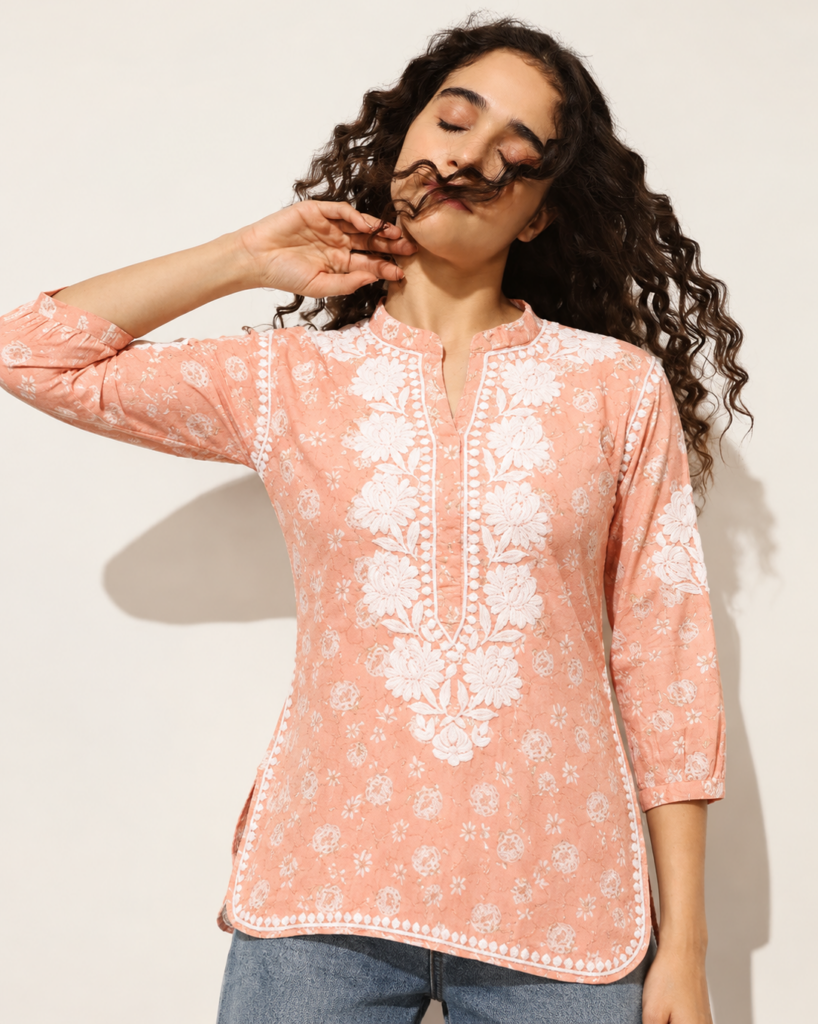
Mulmul
A fine, lightweight cotton fabric known for softness, breathability and a delicate appearance. Its lighter weave can make hand embroidery look especially refined and is useful for summer-focused collections.
Buyer note: lighter colours and finer weaves may need an inner or lining. Approve the actual embroidered sample, not only a plain fabric swatch.
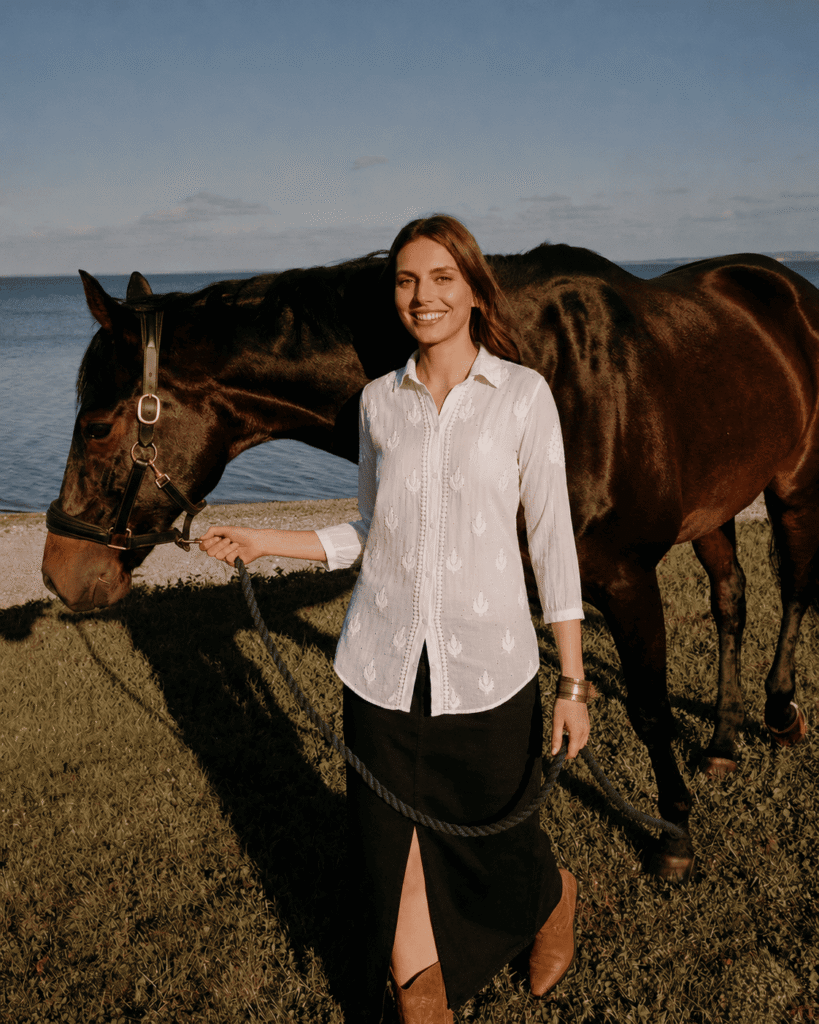
Muslin
A lightweight, fine-woven fabric that provides a soft surface for detailed embroidery and a refined feel. Muslin quality can vary significantly in the market.
Buyer note: ask for exact composition, hand-feel, opacity and construction because the trade name ‘muslin’ does not by itself define one standard quality.
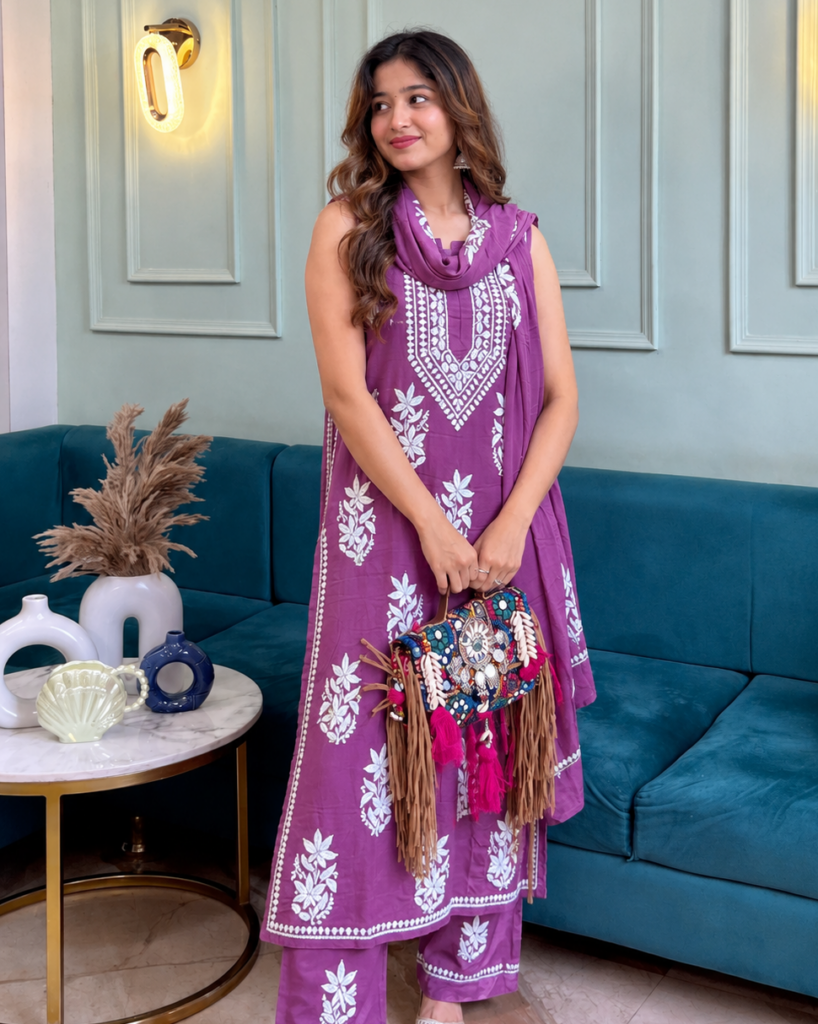
Modal
A regenerated-cellulose fabric with a smooth hand-feel and fluid drape. It suits contemporary kurtas, sets, dresses and comfort-led collections where softness and movement are important.
Buyer note: confirm composition, colour performance, shrinkage and finishing on the production fabric, especially for repeat colours and reorders.
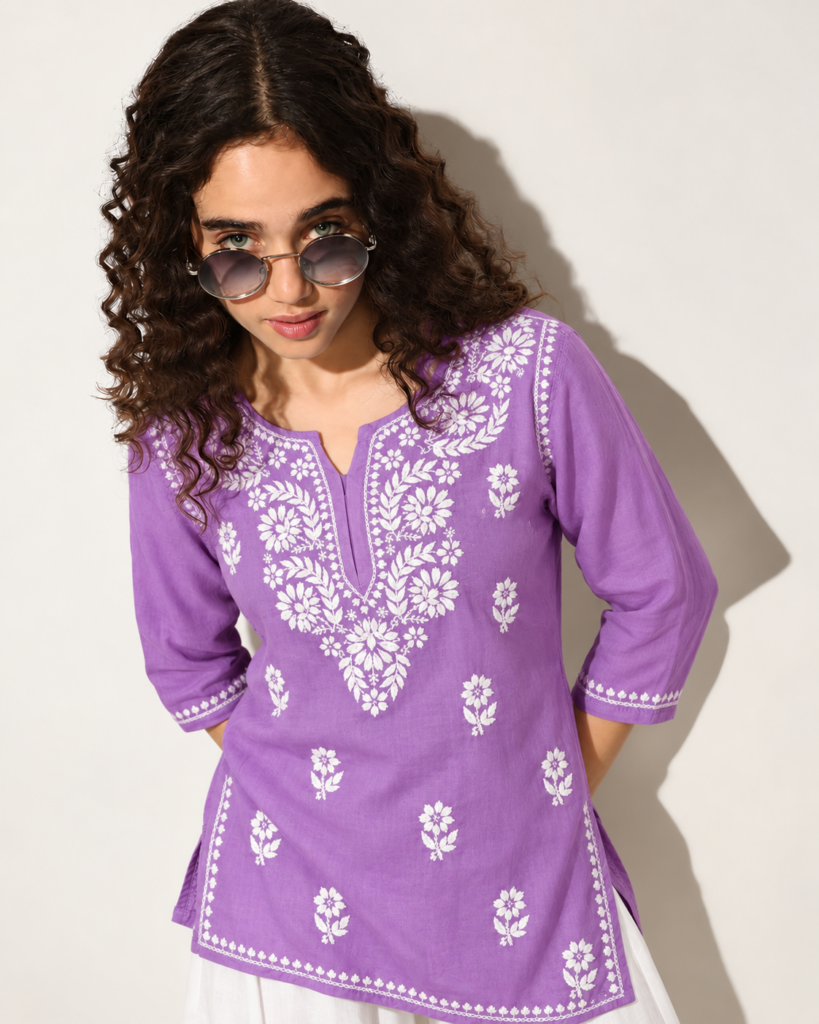
Rayon / Viscose
Rayon and viscose are widely used for soft, flowy Chikankari products. Viscose is commonly sold within the rayon family, but exact composition and quality still need to be confirmed with the supplier.
Buyer note: different qualities can behave very differently after dyeing, washing and repeated wear, so approve the intended production quality.
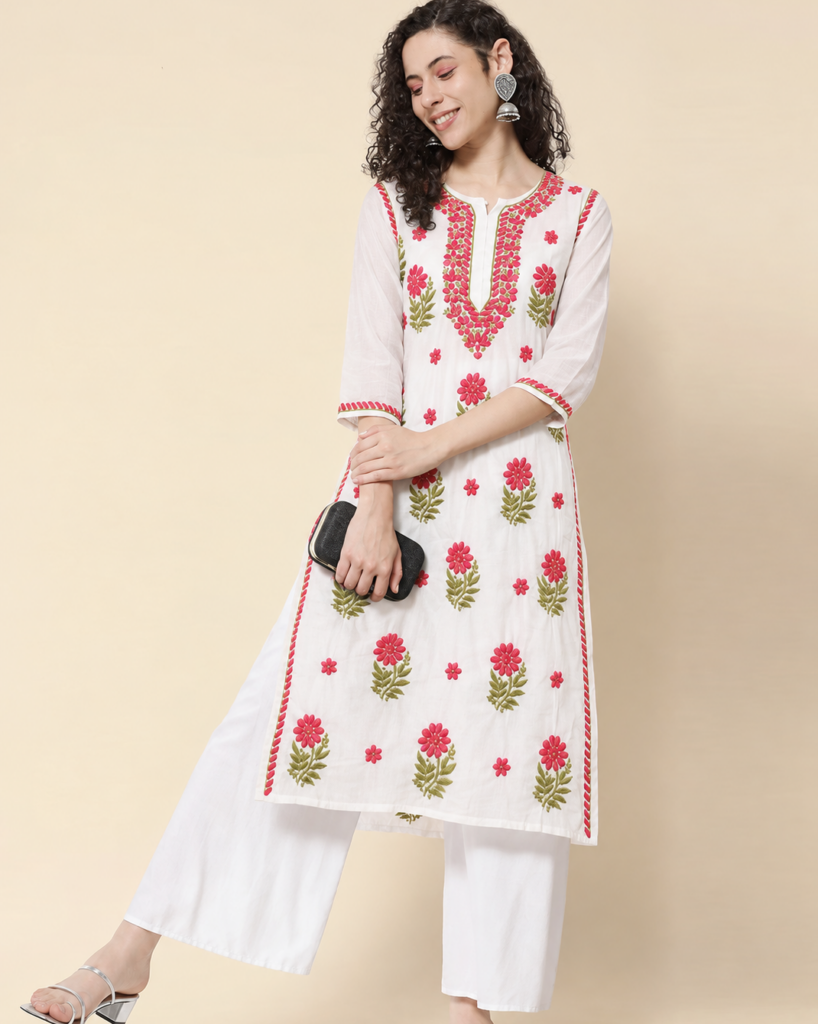
Chanderi
Lightweight, often slightly sheer and known for a crisp drape with subtle lustre, Chanderi can move a Chikankari collection toward a more premium or festive position.
Buyer note: Chanderi can be made in different fibre compositions. Confirm the selected quality before costing, care labelling and bulk production.
Other Fabrics Worth Understanding
Georgette
A sheer, lightweight fabric with a fluid drape and slightly textured surface. It is commonly used for occasion-led kurtas, sets and sarees where movement and layering matter.
Buyer note: composition varies widely, so confirm fibre type, care requirements and embroidery handling before approval.
Kota Doria
An airy, translucent fabric recognised for its lightness and characteristic woven structure. It can work well for summer, festive and dupatta-led assortments where a light visual feel is important.
Buyer note: check actual weave, composition, transparency and embroidery handling on the approved sample.
Silk & Velvet
These can be used as specialist or occasion-led bases when the product brief calls for richer texture, lustre or depth. They behave very differently from lightweight cottons and fluid regenerated-cellulose fabrics.
Buyer note: treat them as sampling-led fabrics and validate embroidery technique, finishing and care requirements before bulk production.
Quick Fabric Comparison for Wholesale Buying
Use this as a shortlisting guide, not as a substitute for sampling. Fabric names cover many qualities, and the production sample should always be judged in the actual colour, embroidery density and garment construction you intend to order.
| Fabric | Feel & Drape | Typical Opacity | Useful For | Wholesale Consideration |
|---|---|---|---|---|
| Cotton | Breathable; crisp to soft | Low to medium | Everyday kurtas, sets, shirts | Confirm quality, weight, shrinkage and repeatability |
| Mulmul | Very light, soft, airy | Often semi-sheer | Summer kurtas, dresses | Check lining need and embroidery density |
| Muslin | Light, soft, refined | Varies by quality | Premium everyday and lightweight occasion products | Approve actual construction, not only trade name |
| Modal | Smooth, fluid, soft | Usually low to medium | Contemporary sets, dresses | Check shrinkage, dyeing and repeat colours |
| Rayon / Viscose | Soft, flowing, versatile | Usually low to medium | Commercial fashion, co-ords, kurtas | Quality varies; confirm exact composition |
| Chanderi | Light, crisp, subtle lustre | Often semi-sheer | Festive and premium collections | Confirm fibre composition and lining |
| Georgette | Fluid, light, textured | Often sheer | Sarees, festive sets, layered occasionwear | Confirm fibre type and care |
| Kota Doria | Airy, light, lightly structured | Often sheer | Summer, festive, dupattas | Check weave, transparency and strength |
Choose Fabric by Collection Goal
A wholesale buyer should start with the customer and product brief, then choose the fabric—not the other way around.
Everyday & Repeat Retail
Start with dependable, wearable bases such as suitable cotton, modal, rayon or viscose qualities. Prioritise comfort, care, size consistency and the ability to reorder the same fabric.
Summer & Warm-Climate Buying
Shortlist breathable, lightweight options such as cotton, mulmul, muslin or Kota. Then check transparency, lining and how the embroidered garment performs after washing.
Premium & Festive Positioning
Chanderi, Georgette, selected muslin qualities and specialist silk-based fabrics can create a more elevated direction when matched to the right embroidery density and finishing.
Contemporary D2C Collections
Modal, rayon and viscose are useful when the brief needs fluid movement, easy silhouettes, co-ords, dresses or modern short-kurta formats.
Private Label Development
Do not select fabric only from a catalogue name. Approve swatches, actual embroidered samples, exact composition, colour, construction and repeat-order feasibility before locking a collection.
Wholesale Fabric Approval Checklist
For B2B buying, the fabric name is only the starting point. Before approving bulk production, confirm the points below with the actual supplier and sample.
- Exact fibre composition: confirm what the fabric is actually made from, not only the trade name.
- Weight, hand-feel and opacity: check whether the finished garment will need an inner or lining.
- Actual embroidered sample: judge the fabric after embroidery, washing and finishing—not only as a plain swatch.
- Colour and dye route: confirm the approved colour and production process.
- Shrinkage and care: verify expected wash/care behaviour after processing.
- Embroidery density: light and dense Chikankari can behave differently on the same base.
- Batch consistency: agree what level of shade and hand-feel variation is acceptable.
- Repeat availability: if reorders matter, confirm whether the same quality can realistically be sourced again.
- Target retail position: make sure the fabric supports the price point and customer expectation of the finished product.
Need Help Choosing the Right Fabric for Your Chikankari Collection?
Share your target customer, product category, price positioning, market and preferred look. We can discuss suitable fabric directions for wholesale, custom manufacturing or private-label development before you move into sampling.
Chikankari Fabric FAQs for Wholesale Buyers
There is no single best fabric. Cotton, Mulmul, Muslin, Modal, Rayon/Viscose, Chanderi, Georgette and Kota can all work depending on the stitch, garment, drape, climate, care requirement and price position. For wholesale buying, approve the actual embroidered sample in the intended fabric.
Cotton is a broad fibre and fabric category. Mulmul is generally a very fine, lightweight cotton fabric with a softer, airier and often more translucent feel. A structured cotton may suit everyday shirts or straight kurtas, while Mulmul can suit softer summer silhouettes.
The names are sometimes used loosely in trade, and qualities can overlap. Do not approve bulk fabric from the name alone. Compare the actual weave, composition, weight, opacity, hand-feel and embroidered sample supplied for your order.
All are regenerated-cellulose fabric families, but they are not interchangeable labels for one identical quality. Viscose is a common type within the rayon family, while Modal is produced to a different specification and usually has a distinct hand-feel and drape. Confirm exact composition and sample performance before ordering.
Fine Mulmul, Muslin, Chanderi, Georgette and Kota can be semi-sheer or sheer depending on the weave, colour and quality. Even the same fabric name can vary, so the lining decision should be made from the actual production sample.
Not always with the same result. Fabric strength, weave, transparency, drape and surface texture affect how embroidery sits and how the finished garment behaves. A design that looks balanced on cotton may need adjustments in placement, density or construction on a much finer or more fluid base.