Authentic Lucknow Chikankari | Wholesale | Manufacturing | Private Label SHOP NOW

Authentic Lucknow Chikankari | Wholesale | Manufacturing | Private Label SHOP NOW
AUTHENTICITY GUIDE
How to Identify Authentic Lucknow Chikankari
Authentic Chikankari is identified by the way the embroidery is made, not by one marketing word, one fabric or one price point. Hand embroidery carries subtle human variation, stitch depth and construction details that machine embroidery tends to regularise.
For wholesale buyers, the safest approach is to examine several signals together: the stitches, the reverse side, thread behaviour, shadow work, texture, pattern flow and supplier transparency.
Important: No single sign proves authenticity on its own. A genuine hand-embroidered piece can still be very neat, while a machine-made piece can be produced on good fabric. Use multiple identifiers together before making a sourcing decision.
7 Practical Identifiers of Hand-Embroidered Chikankari
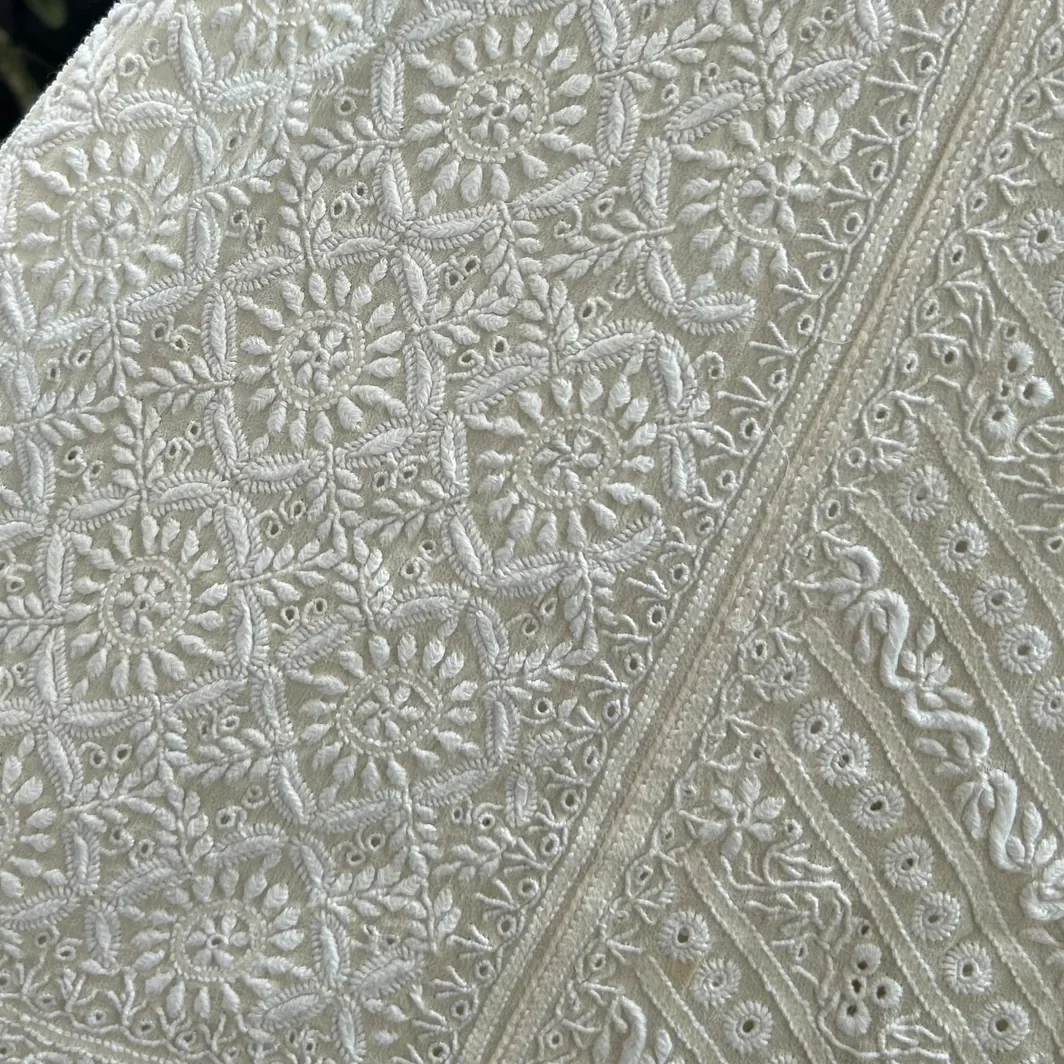
01. Look for Natural Variation in the Stitches
Hand embroidery usually shows small variations in stitch length, spacing, direction and tension. These should look controlled and organic rather than careless. Machine embroidery tends to repeat stitch length and spacing with a more mechanical regularity.
What to check: compare several inches of the same stitch type instead of judging one isolated motif.
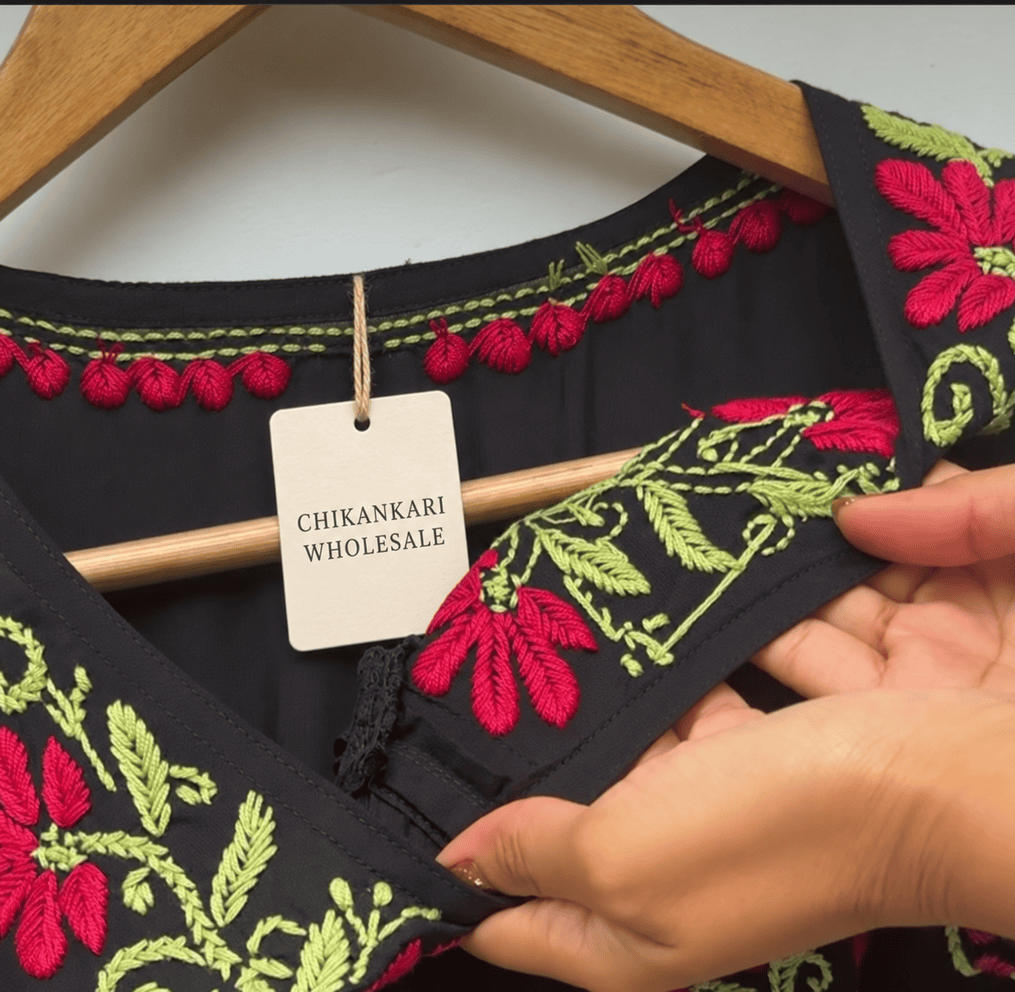
02. Turn the Fabric Over and Check the Reverse
The reverse side can reveal how the embroidery was constructed. Handwork may show individual thread anchoring, changes in direction and small loose ends consistent with manual stitching. Machine embroidery often shows locked, repeated thread paths or stabiliser/backing associated with machine production.
Do not confuse handmade with messy: good handwork can still have a neat reverse. The useful clue is the construction logic, not simply whether the back looks untidy.
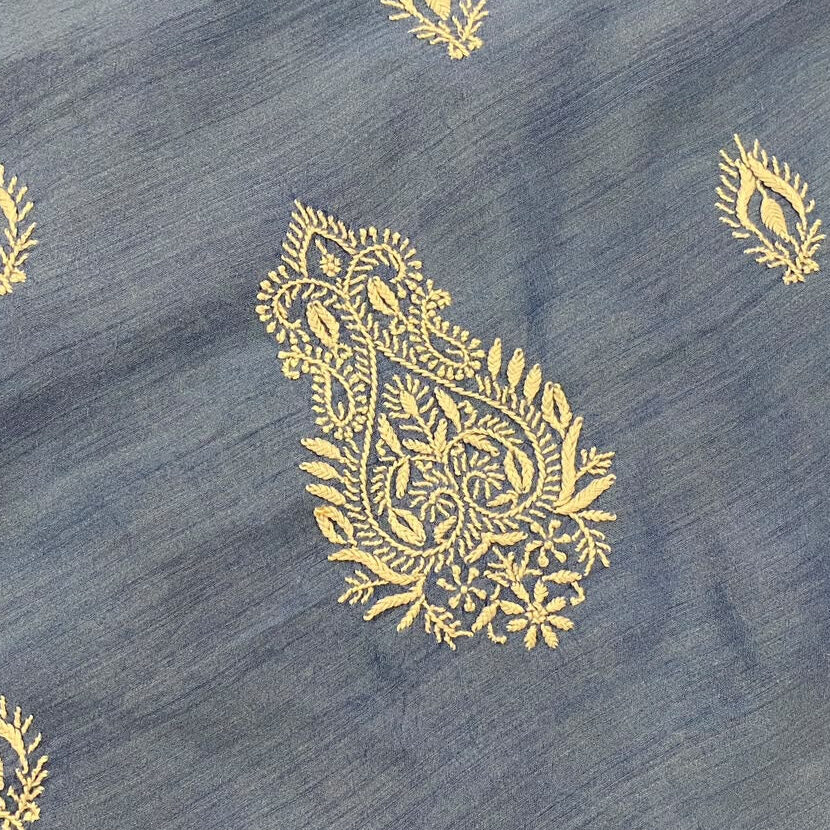
03. Check How the Thread Sits in the Fabric
Authentic hand embroidery usually feels integrated with the fabric rather than sitting as a rigid layer on top. The thread should follow the weave and the stitch technique. Machine embroidery can feel denser, stiffer or more raised, especially when stabilising material has been used.
Buyer test: handle the embroidered area gently and compare its flexibility with an unembroidered section of the same fabric.
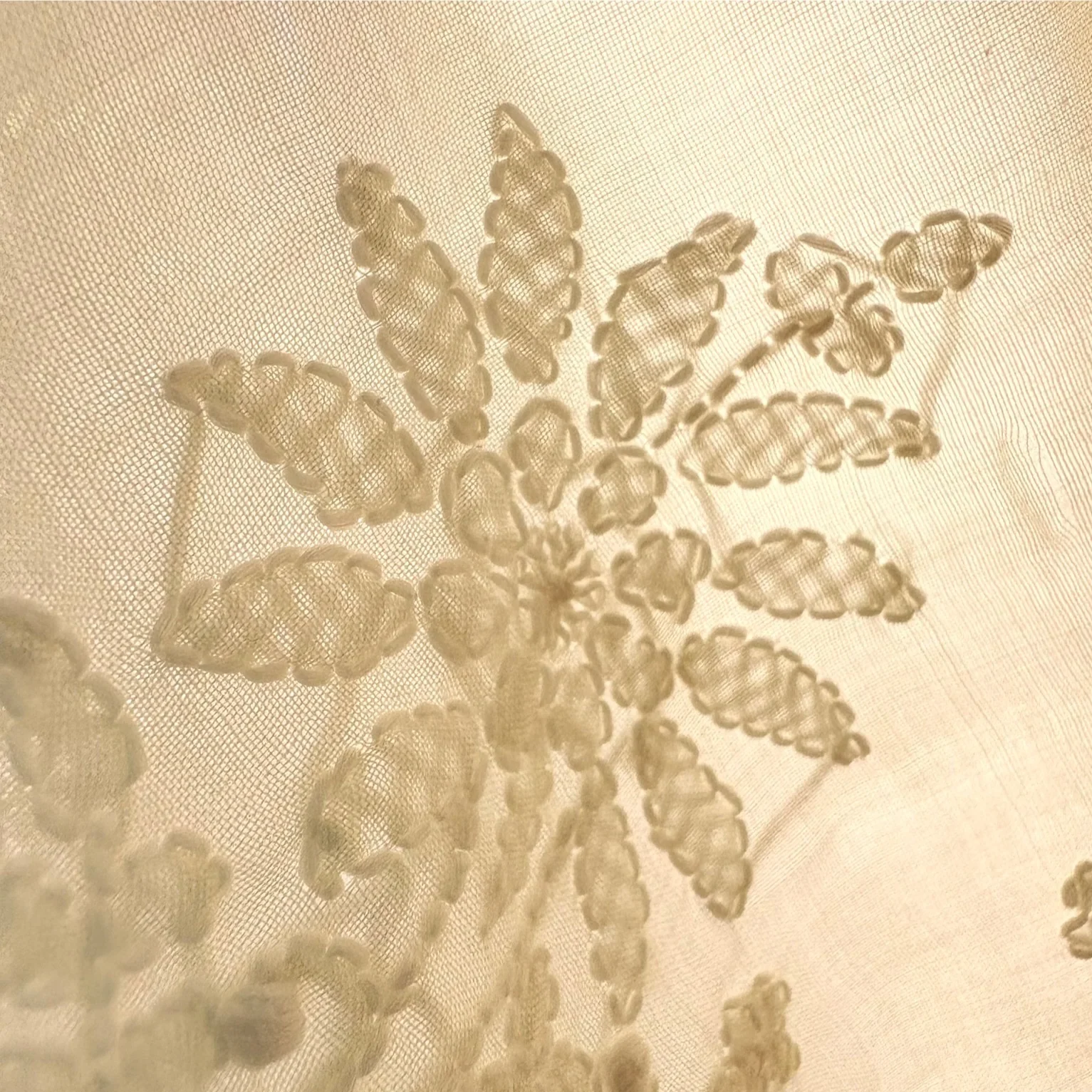
04. Understand Bakhiya and the Shadow Effect
Bakhiya is one of the best-known visual effects associated with Chikankari. In shadow work, stitches worked through or from the reverse create a soft effect that appears through the fabric rather than behaving like a flat printed outline.
What to look for: the effect should relate to the fabric’s transparency and change subtly with light and viewing angle. A flat imitation may reproduce the shape without the same depth.
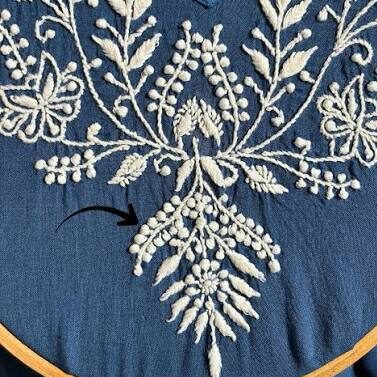
05. Look for Depth in Traditional Stitch Textures
Stitches such as Phanda and Murri create raised, dimensional details rather than a single flat embroidered surface. Authentic handwork often combines more than one stitch behaviour within a motif, giving the design depth and tactile variation.
What to compare: inspect dots, fillings, outlines and shadow areas separately. A machine can imitate the visual idea, but repeated elements often become mechanically identical.
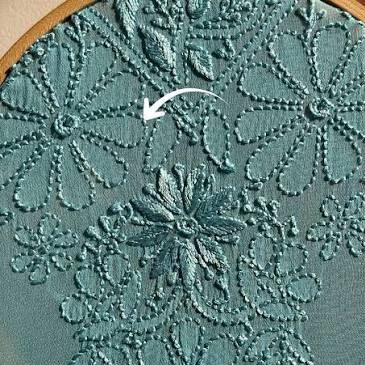
06. Examine the Flow of Motifs Across the Garment
Traditional Chikankari commonly uses floral, leaf, vine and other nature-led motifs. On a well-developed garment, motifs should feel balanced around the neckline, front, sleeves, borders or panels instead of looking like a repeated embroidery file placed without regard to garment construction.
Important: motif type alone does not prove authenticity. The stronger clue is how the motif is executed and integrated with the garment.
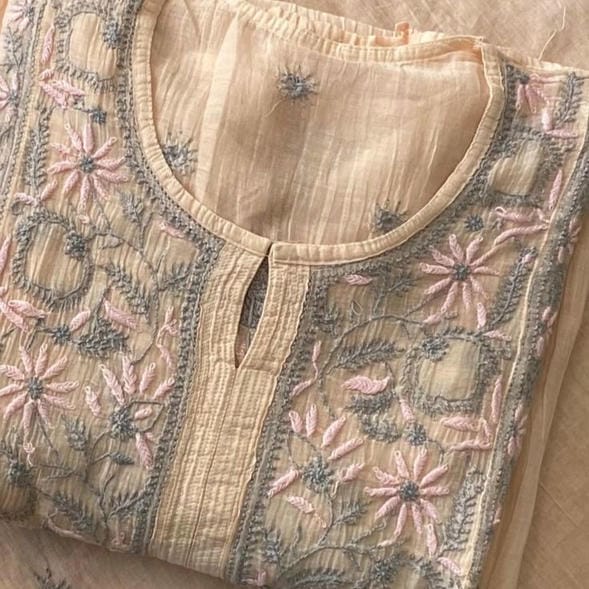
07. Judge the Overall Feel, Not Just the Front View
Hand Chikankari usually retains the softness and movement of the base fabric. Overly rigid embroidery, thick backing, very dense identical stitches or a plastic-like raised surface can indicate machine production.
At the same time, fabric quality alone is not proof. Machine embroidery can be placed on premium cotton, silk or georgette, and genuine handwork can exist on many fabric qualities. Evaluate the embroidery method itself.
Hand Chikankari vs Machine Embroidery — Quick Comparison
| Identifier | Hand Chikankari | Machine Embroidery |
|---|---|---|
| Stitch rhythm | Subtle natural variation | Highly regular repetition |
| Reverse side | Manual thread paths and anchoring | Mechanical locked paths; backing may be present |
| Texture | Mixed depth depending on stitch | Often more uniform in height and density |
| Shadow work | Effect relates to thread placement and fabric transparency | May imitate the look without the same construction |
| Motif repetition | Human variation within repeated motifs | Repeated elements can be nearly identical |
| Fabric movement | Embroidery generally moves with the base fabric | Dense machine stitching/backing can feel more rigid |
Use this table as a screening tool, not a certificate of authenticity. Some modern machine techniques can imitate visual features, so inspect several indicators together.
Secondary Clues: Useful, but Not Proof on Their Own
Price
Hand embroidery requires labour, so extremely low pricing should trigger questions. But a high price does not automatically prove that a garment is hand embroidered.
Fabric
Cotton, silk, georgette and other suitable fabrics are commonly associated with Chikankari, but the base fabric cannot by itself prove how the embroidery was created.
Labels & Seller Claims
Clear origin, care and craftsmanship information is useful for due diligence, but a tag saying ‘handmade’ should still be supported by product evidence and transparent sourcing information.
What Wholesale Buyers Should Ask a Chikankari Supplier to Show
For B2B sourcing, authenticity should be inspectable before you commit to a large order. Ask for evidence that helps you evaluate the actual product rather than relying only on a description.
- High-resolution front close-ups showing stitch texture and motif execution.
- Reverse-side photographs of the same embroidered area.
- Named stitch details where the supplier is representing a particular stitch or technique.
- Process photographs or video where available, especially for Chapai and hand embroidery.
- A physical sample before bulk production when authenticity and quality are commercially important.
- Clear distinction between hand embroidery and machine embroidery on quotations, catalogues and product specifications.
For repeat orders, keep the approved sample and product specification as the benchmark so that authenticity, stitch density and finishing are evaluated consistently.
Authentic Chikankari FAQs
Start with the stitch rhythm and reverse side. Look for controlled natural variation in hand stitches and examine how threads are anchored and carried on the back. Then confirm with texture, shadow work and motif execution rather than relying on one sign.
No. Hand embroidery usually has subtle natural variation, but poor or careless stitching is not a mark of authenticity. Genuine quality handwork should still look controlled, intentional and well finished.
No. Good hand embroidery can have a relatively neat reverse. What matters is evidence of manual construction and thread movement. A deliberately messy back is not proof of authentic Chikankari.
Machines can imitate the appearance of many traditional motifs and stitch effects. That is why buyers should compare depth, thread behaviour, reverse construction and natural variation instead of relying only on the front appearance or stitch name.
Not automatically. Hand embroidery is labour-intensive and may justify higher pricing, but price alone cannot verify production method. Ask for close-ups, reverse-side evidence, process transparency and a sample when required.
Request detailed front and reverse photographs, relevant stitch information, process evidence where available and a physical sample. The approved sample should then become the reference for bulk quality control and repeat orders.