Authentic Lucknow Chikankari | Wholesale | Manufacturing | Private Label SHOP NOW

Authentic Lucknow Chikankari | Wholesale | Manufacturing | Private Label SHOP NOW
USA B2B CHIKANKARI SOURCING FROM INDIA
Chikankari Wholesale USA: Source Lucknowi Chikankari Direct from India
A detailed sourcing resource for U.S. importers, Indian ethnicwear boutiques, fashion brands, ecommerce sellers, resellers, distributors, exhibition businesses and private-label buyers looking to source Chikankari from Lucknow, India.
ChikankariWholesale.com is based in Lucknow, Uttar Pradesh. The objective of this page is to help U.S. buyers move from a broad search such as ‘Chikankari wholesale USA’ or ‘Chikankari supplier from India’ to a commercially workable sourcing brief covering product, fabric, embroidery, sizing, sampling, labels, compliance, landed cost and repeat ordering.
Who We Built This USA Sourcing Page For
Importers & Distributors
For U.S. businesses importing Chikankari for wholesale distribution, multi-store supply, trade accounts or regional resale.
Boutiques & Ethnicwear Retailers
For independent boutiques and Indian/South Asian fashion stores sourcing curated ready-to-sell assortments.
Fashion Brands & Private Label
For U.S. brands developing their own Chikankari styles, measurements, colour stories, labels, packaging and collection identity.
Ecommerce, Resellers & Exhibitors
For Shopify sellers, marketplace businesses, social sellers, exhibitions, trunk shows, pop-ups and event-led retail.
Why Source Chikankari from Lucknow Instead of Buying Blindly from a Generic Marketplace?
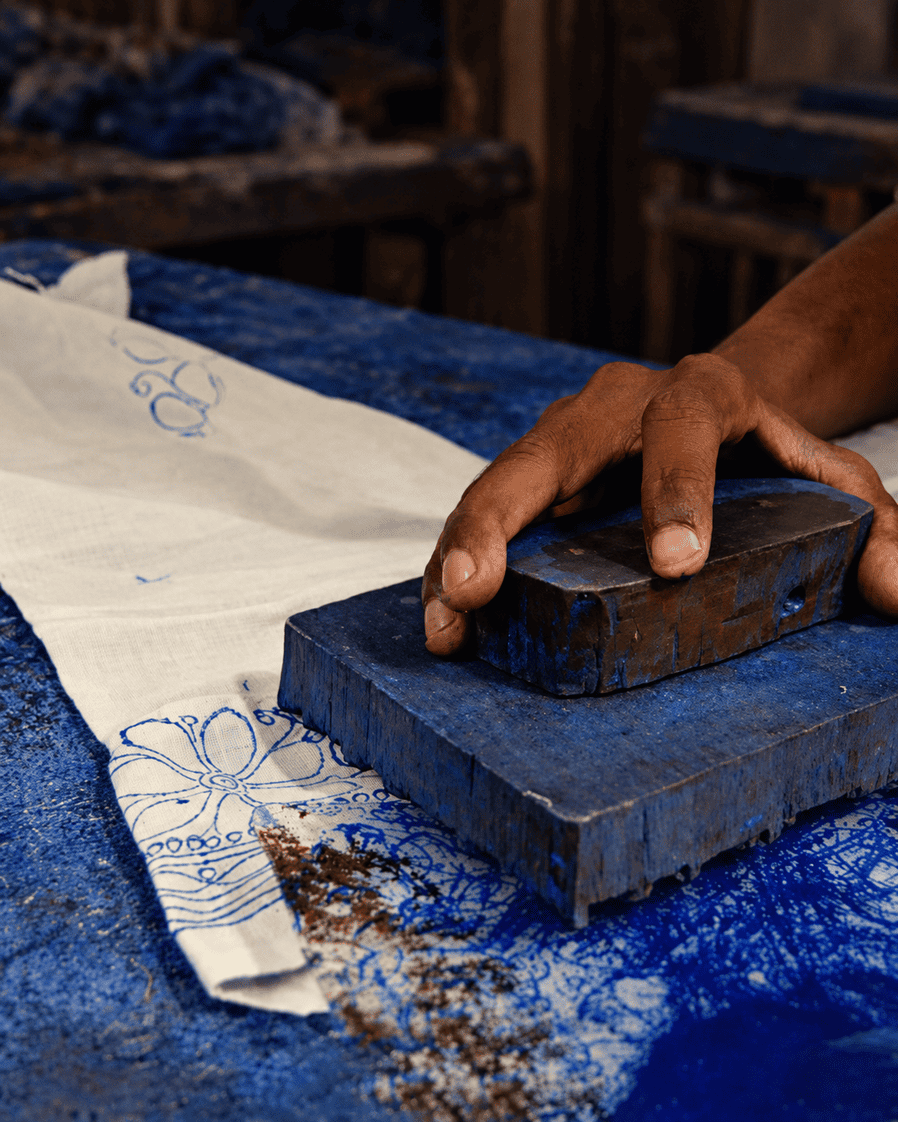
Lucknow is the historic centre most closely associated with Chikankari. Direct B2B sourcing gives a buyer the opportunity to evaluate more than a front-facing product photograph.
A professional sourcing decision should consider fabric composition, opacity, embroidery method, stitch character, density of work, garment measurements, construction, finishing, colour, lining, labels, packaging and repeatability.
This matters particularly in the U.S. because the same craft may be sold at very different retail positions—from accessible ethnicwear and summer dressing to premium occasionwear and designer-led collections. The supplier brief needs to reflect the commercial position you are actually building.
Chikankari Product Categories for U.S. Wholesale Buyers
Women’s Chikankari
Kurtis, kurtas, kurta sets, suit sets, dresses, co-ords, tops, sarees, dupattas, lehengas and bottoms across everyday, contemporary, festive and premium positioning.
Men’s Chikankari
Men’s kurtas, kurta-pajama sets, shirts and related products for weddings, festive periods, cultural events and contemporary ethnic dressing.
Fabric & Unstitched
Chikankari fabric, unstitched kurta pieces, unstitched suit sets and semi-stitched requirements for designers or businesses completing part of the production in the U.S.
Build the USA Assortment by Customer, Climate and Occasion
The United States is too large and commercially varied for one generic ‘USA assortment’. A Florida resort customer, New Jersey South Asian boutique, Texas wedding seller, California ecommerce brand and New York designer can require very different products.
- Warm-weather / resort / summer: lighter cottons, Mulmul, Muslin and breathable silhouettes can support spring-summer merchandising.
- Wedding & festive: kurta sets, suits, sarees, dupattas and richer embroidery can serve weddings, Eid, Diwali and event-led retail.
- Contemporary fashion: short kurtas, shirts, dresses, tops and co-ords can translate Chikankari into broader lifestyle positioning.
- Premium: refined fabrics, stronger hand-work, controlled finishing and distinctive silhouettes can support higher-ticket brand positioning.
- Exhibitions: use a core of accessible sellers plus visually strong statement pieces that help attract customers and test premium demand.
Use your own customer data and retail channel to decide the mix; geography alone is not a sufficient buying strategy.
Four Ways to Source Chikankari for the United States
Ready Stock
Best when speed, immediate availability or upcoming event timing matters more than product customisation.
Curated Wholesale
For boutiques and resellers selecting from available designs, fabrics, colours, sizes and price positions.
Custom Manufacturing
For buyers requiring changes to fabric, colour, embroidery, silhouette, measurements, length, lining or garment construction.
Private Label
For U.S. brands that need products developed around approved measurements, labels, packaging and a consistent brand specification.
Wholesale Economics: Calculate the Landed Cost, Not Just the India Purchase Price
A U.S. buyer should evaluate the complete unit economics before deciding whether a style is commercially viable.
Landed cost can include: product value, sampling/development allocation, international freight, insurance where applicable, customs duty, merchandise processing or other applicable import fees, customs brokerage, domestic delivery, labels/packaging and fulfillment costs.
Customs duty is not one fixed ‘Chikankari rate’. The Harmonized Tariff Schedule of the United States classifies merchandise according to product type, construction, fibre composition and other characteristics. A cotton woven women’s blouse, a rayon dress, a men’s kurta and an embroidered scarf can fall under different HTS provisions and duty rates.
Build your target retail price backwards from expected landed cost, channel fees, promotions, returns, overhead and required gross margin. A lower supplier price does not automatically create a better-margin product if quality, repeatability or sell-through suffers.
Sizing Chikankari for U.S. Customers
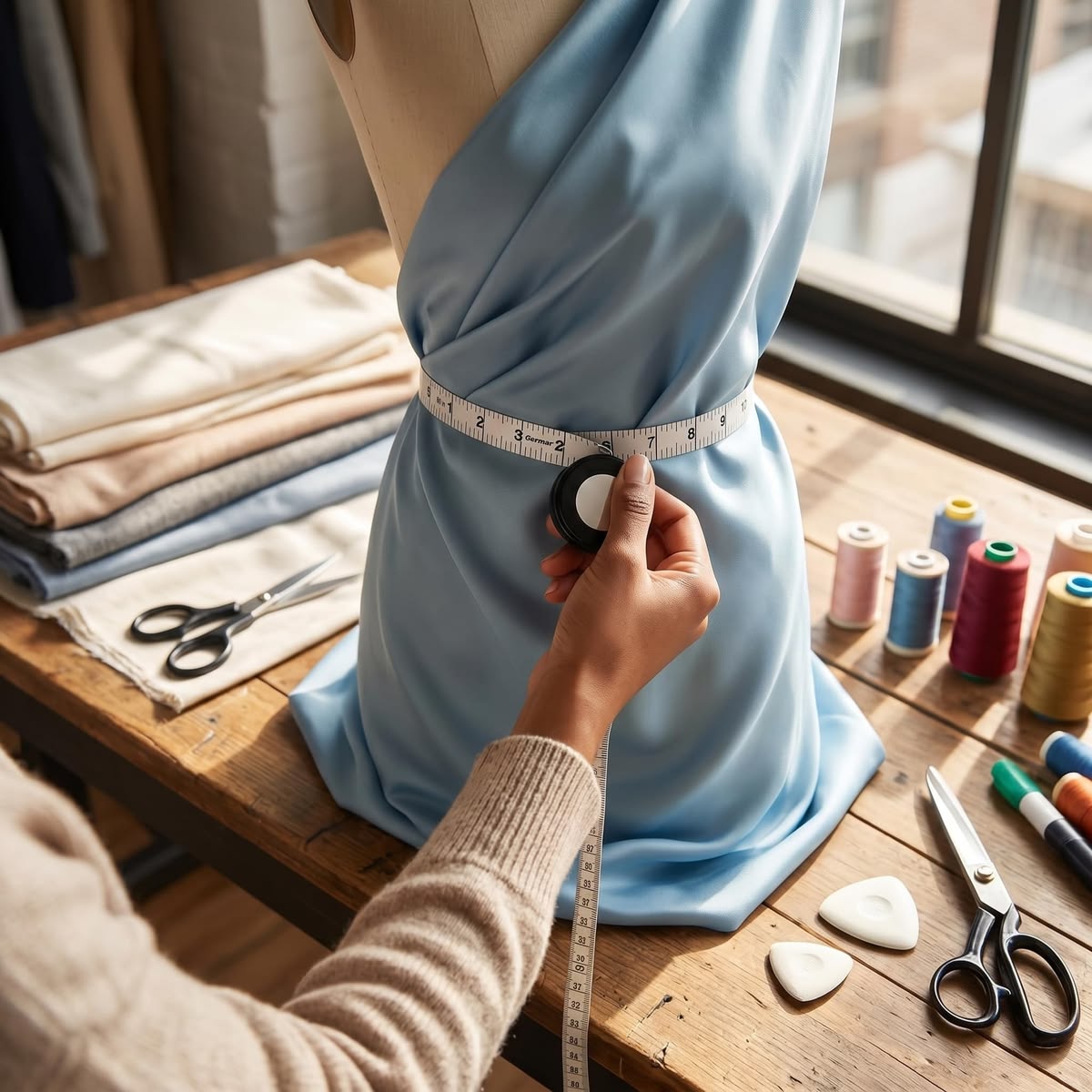
Do not convert Indian size labels into U.S. sizes by label name alone. The same ‘Medium’ can represent materially different garment measurements between brands.
For existing products, review actual garment bust, waist, hip, shoulder, sleeve and length measurements. For a U.S. private-label collection, provide a target-market measurement chart or tech pack and approve the fit sample before bulk production.
Also decide whether your ecommerce size chart displays body measurements or garment measurements. Mixing the two creates preventable returns.
Plus-size or extended-size development should be graded and fit-tested rather than created only by adding equal inches to every measurement.
U.S. Import Planning: HTS Classification, Country of Origin & Customs
U.S. Customs and Border Protection advises importers to describe merchandise precisely, including its country of origin, composition, intended use and value, because these details affect classification and entry. The Harmonized Tariff Schedule of the United States (HTSUS) contains the applicable classification and tariff rates.
For Chikankari apparel, the importer or customs broker should confirm the correct HTS classification for each product. A single generic code should not be copied across kurtas, dresses, trousers, sarees, scarves or fabric.
Imported articles generally need country-of-origin marking that is legible and conspicuous to the ultimate U.S. purchaser. For garments, the placement and permanence of origin marking can be subject to specific customs rules. The importer should approve the final label specification before bulk production.
Depending on the type and value of entry, a customs bond or formal-entry requirements may apply. Frequent commercial importers commonly work with a licensed customs broker, but using a broker does not remove the importer’s responsibility to exercise reasonable care over classification, value, origin and documentation.
U.S. Textile Labels: Fibre Content, Origin, Responsible Business & Care
Federal Trade Commission guidance states that most textile and wool products sold in the United States require labels identifying fibre content, country of origin and the manufacturer or another responsible business. Clothing also falls under the FTC Care Labeling Rule, which requires care instructions.
For private-label or branded wholesale orders, the U.S. buyer should approve label content before production. Fibre claims must match the actual composition; the country-of-origin statement must be accurate; and the responsible company identification should follow the applicable FTC requirements.
The FTC also explains that country-of-origin information is relevant to internet or mail-order advertising. Your ecommerce product page should therefore not create an origin claim that conflicts with the physical label.
An FTC Registered Identification Number (RN) can be used by eligible U.S. firms instead of the company name, but an RN is not required simply to do business in the United States.
U.S. Apparel Safety: Flammability Matters
The U.S. Consumer Product Safety Commission’s general wearing-apparel flammability standard is found in 16 CFR Part 1610. It applies broadly to textiles used in adult and children’s wearing apparel, subject to stated exceptions and testing exemptions.
For U.S. buyers, this means fabric selection is not only an aesthetic decision. Certain constructions and products may require testing, certification or records depending on the item. Children’s sleepwear is subject to additional, more specific requirements and should not be treated like ordinary adult fashion apparel.
If you are developing a U.S. collection, determine applicable safety requirements before bulk production and before selecting trims, raised-surface fabrics or unusual fabric treatments.
What to Approve Before a U.S. Wholesale Shipment
- Final SKU/style list and quantity by colour and size
- Fabric composition and actual fibre content
- Embroidery type, density, placement and approved reference
- Garment measurements, fit and size breakdown
- Country-of-origin marking
- Fibre-content and responsible-business identification
- Permanent care instructions for apparel where required
- Any applicable product-safety / flammability documentation
- Commercial invoice descriptions and values
- HTS classification information required by the importer/broker
- Packing list, carton count, gross/net weight and shipping marks
- Importer-of-record and customs-broker arrangements
Exact duty, shipping cost, entry fees and transit time should be confirmed against the final shipment and classification rather than treated as universal website figures.
Sampling & Quality Control for U.S. Buyers
For a first order—especially custom manufacturing or private label—use the sample as a measurable production benchmark rather than simply a design preview.
Approve fabric, shade, opacity, embroidery, front/reverse finish, neckline, sleeves, garment length, size measurements, seam construction, lining, loose threads, stains, finishing, labels and packaging. Preserve the approved sample and specification sheet for bulk QC and reorders.
Because hand processes can involve natural variation, define what is acceptable commercially rather than expecting two handmade pieces to be mathematically identical.
A Practical USA-to-Lucknow Sourcing Workflow
- Define the U.S. buyer brief: state/region, customer, channel, product categories, target retail price and approximate quantity.
- Choose the sourcing route: ready stock, curated wholesale, custom manufacturing or private label.
- Shortlist the collection: product type, fabric, colour, embroidery level and intended selling occasion.
- Review measurements and samples: confirm fit, fabric, embroidery, construction and finishing.
- Lock U.S. compliance information: fibre content, origin, care labels, responsible-business identification and applicable safety requirements.
- Confirm import data: product descriptions, HTS classification with importer/broker, declared values, origin and entry arrangements.
- Approve bulk and packing: QC, size/colour quantities, labels, carton packing and shipping documentation.
- Import, sell and measure: track sell-through, returns and margin by SKU/size.
- Reorder proven products: preserve sample, fabric, embroidery, size and colour references for repeatability.
Sourcing for New York, New Jersey, Texas, California, Florida & Across the USA
ChikankariWholesale.com does not claim a U.S. office or warehouse. The business is based in Lucknow, India, and this page is intended for B2B buyers sourcing into the United States.
The right collection may differ substantially between a New Jersey South Asian retailer, Texas wedding seller, California lifestyle brand, Florida resort boutique, New York designer or nationwide ecommerce business.
Instead of creating thin state pages that repeat the same text, we recommend sharing your actual customer profile, state/region, sales channel and price position so the sourcing brief can be commercially useful.
Chikankari Wholesale USA FAQs
Yes. U.S. boutiques, importers, retailers, distributors, ecommerce sellers, resellers and fashion brands can source Chikankari from India. The commercial order should confirm product specifications, labels, importer arrangements, customs classification and shipping.
No. ChikankariWholesale.com is based in Lucknow, Uttar Pradesh, India. This is a U.S.-focused B2B sourcing page and does not imply a U.S. office, warehouse or local entity.
Potential categories include kurtis, kurtas, kurta sets, suits, dresses, tops, co-ords, sarees, dupattas, lehengas, bottoms, men’s styles, fabric and unstitched products, subject to current availability and production feasibility.
Private-label enquiries can be reviewed based on the buyer brief, fabric, embroidery, silhouette, measurements, labels, packaging, quantity and production feasibility. An approved sample and specification are recommended before bulk production.
MOQ is not one universal figure. It varies by product, ready-stock availability, fabric, embroidery, customisation and production model. The applicable MOQ should be confirmed on the actual quotation.
Freight depends on packed weight, dimensions, destination, service level, courier or freight route and commercial terms. Shipping should be quoted against the final shipment rather than presented as a universal USA rate.
There is no single duty rate for all Chikankari. U.S. duty depends on the HTS classification, garment type, construction, fibre composition and other product characteristics. The importer or customs broker should classify each relevant product.
Imported goods are generally subject to U.S. country-of-origin marking requirements. Textile products also have FTC origin-disclosure rules. The exact label wording and placement should be confirmed for the specific garment and import structure before bulk labels are produced.
FTC guidance states that most textile products require fibre content, country of origin and identification of the manufacturer or another responsible business. Apparel is also subject to care-label requirements. The importer/brand should approve the final label.
General wearing apparel is covered by the CPSC flammability framework under 16 CFR Part 1610, subject to exemptions and exceptions. Children’s sleepwear has additional requirements. U.S. buyers should determine which testing, certification and record requirements apply to their product.
Yes. Sampling is strongly useful for custom and private-label production because it establishes the approved benchmark for fabric, embroidery, measurements, fit, construction and finishing.
Buyer-specific size development can be reviewed for custom/private-label projects. Provide the target measurement chart or tech pack and approve fit samples. Extended sizes should be graded thoughtfully rather than produced using a simple uniform size increase.
Yes, exhibition and event-led buyers can submit their dates, product categories, approximate quantity and target price range. Ready-stock feasibility and shipping timing should be confirmed against the actual event schedule.
Send your state/city, buyer type, product categories, approximate quantity, sourcing model, preferred fabrics or styles, target price position and required timeline. For custom work, include reference images, measurement charts or a tech pack where available.
Track sell-through by SKU, size, colour and price point. Preserve the approved sample, measurements, fabric, embroidery and colour references so proven products can be identified accurately for a repeat enquiry.