Chikankari has existed for generations, but that does not mean its market position is fixed.
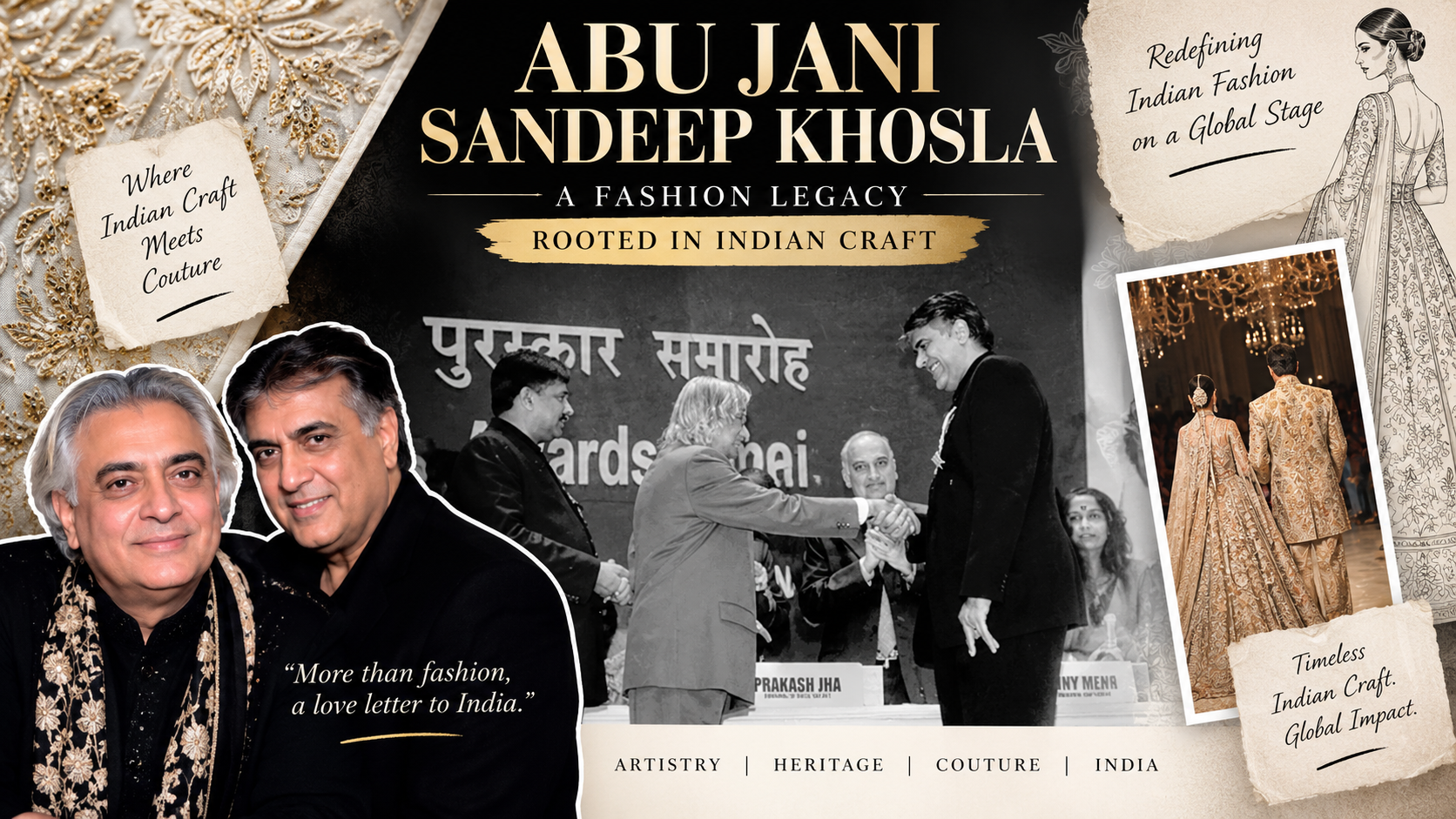
Abu Jani Sandeep Khosla provide one of the clearest examples of how a traditional embroidery can be repositioned through design. Their work helped move Chikankari beyond its familiar association with casual cotton kurtas and into Indian luxury couture, bridalwear and high-value occasion dressing.
This matters commercially because it shows that the perceived value of a craft can change when designers alter the fabric, scale, composition, finishing and context in which customers experience it.
Case study snapshot
| Design house | Abu Jani Sandeep Khosla |
|---|---|
| Craft focus in this case | Chikankari |
| Key period | Early experimentation from the 1990s, according to designer interviews |
| Strategic move | Translate traditional Chikankari into couture through new fabrics, scale and styling |
| Core lesson | Premiumisation comes from design transformation, not simply adding a higher price |
The opportunity: a familiar craft with underdeveloped premium potential
Traditional Chikankari had strong recognition, but much of the market historically associated it with lighter, everyday clothing. The designers saw potential to take the embroidery into more theatrical and luxurious settings.
Public interviews describe experimentation with fabrics such as chiffon, organza and georgette, as well as efforts to revive or reintroduce more complex stitches and push the scale of the work.
Lesson 1: change the context and you can change perceived value
The same embroidery technique can communicate different value depending on its context.
A cotton kurta and a couture lehenga may both use Chikankari, but customers perceive them differently because of:
- fabric,
- embroidery density,
- silhouette,
- finishing,
- styling,
- occasion,
- brand positioning.
This is why wholesalers should not think of “Chikankari” as one price category. The underlying product architecture matters more.
See our guide on why Chikankari wholesale prices differ for the commercial drivers behind that variation.
Lesson 2: innovation works best when the craft grammar is understood
Strong design innovation does not come from ignoring tradition. It usually comes from understanding it deeply enough to know what can be changed.
That can include:
- using traditional stitches at different scales,
- changing base fabrics,
- combining techniques,
- reframing embroidery for bridal or couture silhouettes,
- using tonal or embellished treatments.
For buyers, this reinforces the importance of learning actual stitch vocabulary rather than evaluating every embroidered garment as the same thing. The Chikankari stitches guide is a useful starting point.
Lesson 3: luxury needs time for product development
Designer interviews indicate that developing the Chikankari language used by the house took years of experimentation rather than one season.
This is an important business lesson. New product development in craft cannot always be rushed into a standard factory calendar.
If a fashion brand wants a distinctive private-label Chikankari collection, it should budget time for:
- fabric trials,
- embroidery sampling,
- motif placement,
- garment fitting,
- finishing tests,
- approval revisions.
Our sampling and product-development guide covers this process from the B2B side.
Lesson 4: revive skill by creating demand for it
If a complex stitch no longer sells, artisans have little commercial reason to continue producing it. Design houses can help preserve skills by creating products customers actively want.
This is more sustainable than preservation without demand. The economic loop is simple:
design relevance → customer demand → production orders → continued use of skilled techniques.
Lesson 5: premiumisation must be visible
A premium product needs details the customer can perceive. If the buyer cannot see or feel the difference, a higher price becomes difficult to defend.
Visible value can come from:
- finer fabric,
- denser or more complex embroidery,
- better drape,
- more considered silhouettes,
- hand finishing,
- distinctive styling.
What Chikankari brands can learn
- Do not assume traditional positioning is permanent.
- Use design to create new occasions for the craft.
- Develop products before trying to scale them.
- Make premium value tangible, not rhetorical.
- Protect skill by building demand around it.
What wholesale buyers should take from this
The couture example sits at the top of the market, but the principle applies across price bands. A retailer can create stronger differentiation by choosing a clear entry, mid and premium architecture instead of filling the store with products that all look similar.
Use the Chikankari price-ladder guide to structure those tiers, then review the wholesale catalogue for products that fit each role.
Sources and methodology
This case study draws on designer interviews and fashion coverage, including Vogue India’s interview on Lucknowi Chikankari and public coverage of the designers’ craft practice. Business lessons are analytical interpretations of those documented design decisions.